Choosing between a traditional 401(k) and a Roth 401(k) is one of the most important decisions you will make when planning for retirement, and the right choice depends heavily on your current tax bracket, your expected income in retirement, and your broader financial goals. Both account types share the same annual contribution limits and are typically offered through an employer sponsored retirement plan, yet they treat your contributions and withdrawals in fundamentally different ways for tax purposes. This guide breaks down everything you need to know about traditional 401(k) plans and Roth 401(k) plans in 2026, including updated contribution limits, tax treatment, employer matching rules, and practical strategies for deciding which option, or combination of both, makes the most sense for your situation.
What Is a Traditional 401(k) and How Does It Work?
A traditional 401(k) is an employer sponsored retirement savings plan that allows you to contribute a portion of your paycheck before income taxes are calculated, which reduces your taxable income for the year you make the contribution. Your money then grows tax deferred inside the account, meaning you do not pay taxes on investment gains, dividends, or interest each year the way you might with a regular brokerage account.
When you eventually withdraw funds from a traditional 401(k) in retirement, those withdrawals are taxed as ordinary income at whatever tax rate applies to you at that time. This structure makes traditional 401(k) plans particularly attractive for people who expect to be in a lower tax bracket during retirement than they are during their working years, since the tax deferral effectively allows you to shift your tax bill to a period when your income, and therefore your tax rate, may be lower.
What Is a Roth 401(k) and How Is It Different?
A Roth 401(k) flips the tax treatment of a traditional 401(k) on its head. Contributions to a Roth 401(k) are made with after tax dollars, meaning you pay income tax on that money now, before it goes into your account, rather than deferring the tax bill until retirement. Because you have already paid taxes on your contributions, qualified withdrawals in retirement, including all investment growth, are completely free of federal income tax.
This tax free growth makes a Roth 401(k) especially valuable for younger workers or anyone who expects their income, and therefore their tax rate, to rise significantly over time. Paying taxes now, while your income and tax bracket are relatively low, and then locking in tax free withdrawals for decades of compounding growth can result in substantially more spendable money in retirement compared to a traditional account, particularly if you have many years left until you plan to retire.
What Are the 2026 Contribution Limits for 401(k) Plans?
For 2026, the IRS has increased the annual employee contribution limit for 401(k), 403(b), and most 457 plans to $24,500, up from $23,500 in 2025. This limit applies collectively to your combined contributions across both a traditional 401(k) and a Roth 401(k) if your employer offers both options within the same plan, so you cannot contribute the full amount to each separately.
Workers aged 50 and older can make additional catch up contributions on top of the standard limit, and for 2026 that catch up amount has increased to $8,000, allowing eligible participants to contribute up to $32,500 total for the year. A special higher catch up contribution limit of $11,250 applies specifically to workers aged 60, 61, 62, and 63, thanks to a provision introduced under the SECURE 2.0 Act, giving people in that age bracket an even larger opportunity to boost their retirement savings in the final years before retirement.
How Does Employer Matching Work With Traditional and Roth 401(k) Contributions?
Many employers offer a matching contribution based on how much you personally contribute to your 401(k), often matching a percentage of your contributions up to a certain limit, such as fifty cents for every dollar you contribute up to six percent of your salary. This employer match is essentially free money and represents an immediate, guaranteed return on your contributions that is difficult to match through any other investment strategy.
Importantly, employer matching contributions are almost always deposited into a traditional, pretax account regardless of whether your own contributions go into a traditional or Roth 401(k). This means that even employees who contribute exclusively to a Roth 401(k) will typically end up with some pretax money in their overall 401(k) balance, which will be taxed as ordinary income when withdrawn in retirement, so it is worth understanding this mixed tax treatment when planning your withdrawal strategy later in life.
Which Option Makes Sense If You Expect Lower Income in Retirement?
If you anticipate that your income, and therefore your tax bracket, will be lower in retirement than it is during your working years, a traditional 401(k) often makes more financial sense. By deferring taxes until retirement, you effectively pay tax on that income at a lower rate than you would if you paid tax on it today while you are still earning a higher salary.
This scenario commonly applies to workers who are currently in their peak earning years, perhaps in their forties or fifties, and who expect to significantly scale back their work or retire entirely within a decade or two. For these workers, prioritizing traditional 401(k) contributions can generate meaningful tax savings today while still allowing their investments to grow for years before withdrawals begin.
Which Option Makes Sense If You Expect Higher Income in Retirement?
Younger workers early in their careers, or anyone who expects significant income growth in the years ahead, often benefit more from prioritizing Roth 401(k) contributions. Since your current tax bracket may be relatively low compared to where it will be later in your career, or even in retirement if you have substantial savings and other income sources, paying taxes now at today's lower rate can be a smart long term strategy.
This approach becomes even more compelling when you consider that Roth 401(k) withdrawals do not count as taxable income in retirement, which can help you avoid pushing yourself into a higher tax bracket, reduce the taxable portion of your Social Security benefits, and potentially lower your Medicare premiums, all of which are calculated based on your reported income during retirement.
Can You Contribute to Both a Traditional and a Roth 401(k) at the Same Time?
Yes, many employer plans allow you to split your contributions between a traditional 401(k) and a Roth 401(k) in whatever proportion you choose, as long as your combined contributions do not exceed the annual IRS limit. This strategy, sometimes called tax diversification, can provide valuable flexibility in retirement by giving you both taxable and tax free income sources to draw from.
Having both types of accounts allows you to strategically manage your taxable income each year in retirement, potentially withdrawing more from your Roth account in years when you need extra money but want to avoid moving into a higher tax bracket, while relying on traditional account withdrawals in years when your other income is lower. This flexibility can be a powerful tool for minimizing your overall lifetime tax burden.
How Do Required Minimum Distributions Affect Traditional and Roth 401(k) Accounts?
Traditional 401(k) accounts are subject to required minimum distributions, commonly known as RMDs, which force you to begin withdrawing a certain percentage of your account balance each year once you reach the applicable age set by federal law. These mandatory withdrawals are taxed as ordinary income and cannot be avoided simply because you do not need the money.
Thanks to changes made under the SECURE 2.0 Act, Roth 401(k) accounts are no longer subject to required minimum distributions during the original account owner's lifetime, aligning them with the treatment that Roth IRAs have always received. This change makes Roth 401(k) accounts particularly attractive for people who want to preserve their tax free growth for as long as possible, or who plan to leave retirement assets to heirs.
What Happens to Your 401(k) When You Change Jobs?
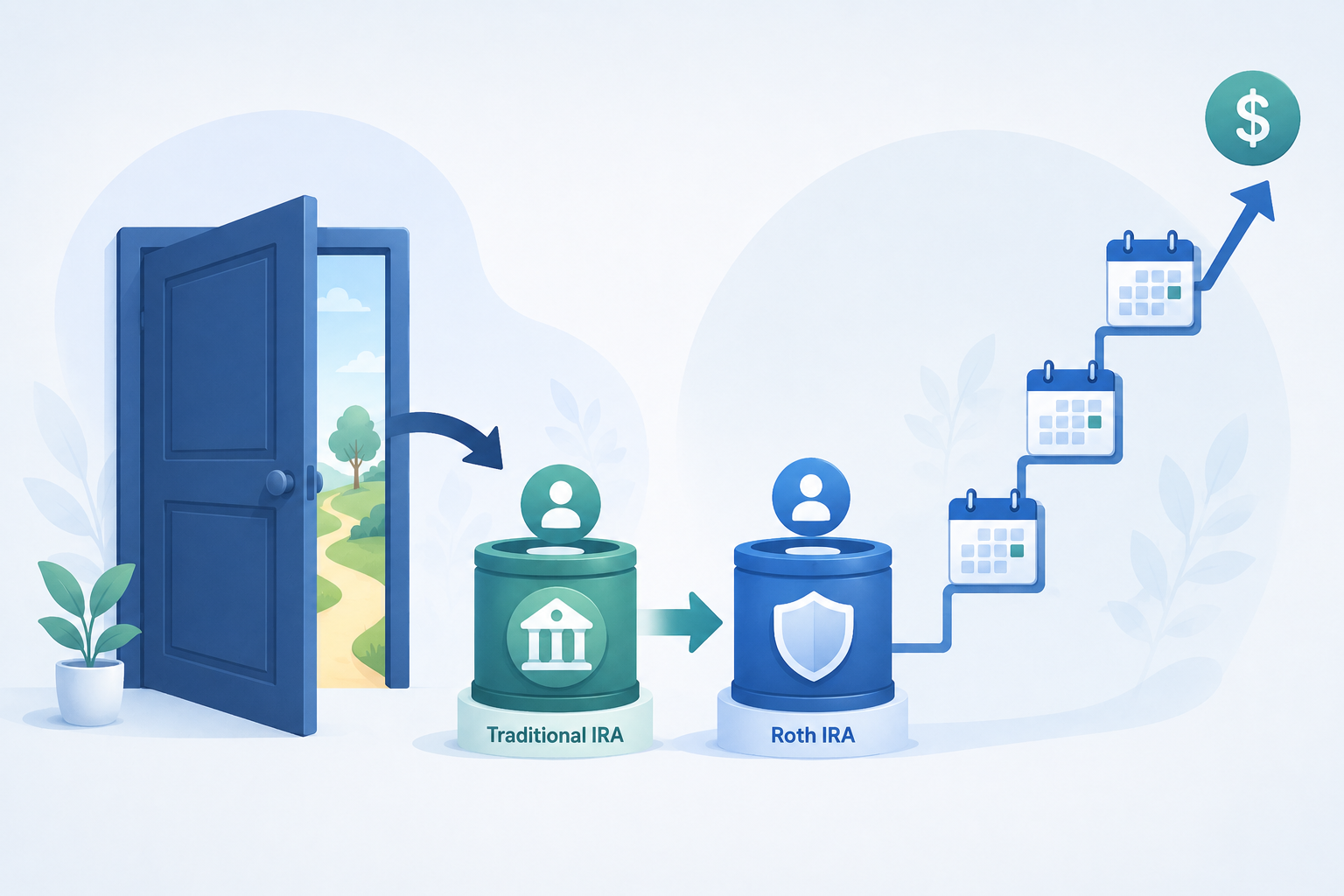
When you leave a job, you generally have several options for your 401(k) balance, including leaving it with your former employer's plan if permitted, rolling it over into your new employer's 401(k) plan, or rolling it over into an individual retirement account of the same tax type. Rolling a traditional 401(k) into a traditional IRA, or a Roth 401(k) into a Roth IRA, preserves the tax treatment without triggering any immediate tax consequences.
It is important to keep traditional and Roth balances separate during any rollover, since mixing them incorrectly can create unexpected tax complications or even trigger a taxable event. Working with your plan administrator or a qualified financial professional during a job change can help ensure your rollover is handled correctly and that you do not lose track of any employer matching funds that may still be subject to a vesting schedule.
How Should Self Employed Workers Think About Roth Versus Traditional Accounts?
Self employed individuals and small business owners often have access to a Solo 401(k), which offers the same traditional versus Roth choice as a standard employer sponsored plan, but with contribution limits that can be considerably higher once you account for both employee and employer contribution components. This structure allows self employed workers to potentially shelter a much larger portion of their income from current taxes, or build a much larger pool of tax free retirement savings, depending on which option they choose.
Because self employment income can fluctuate significantly from year to year, some self employed workers choose to adjust their strategy annually, contributing more to a traditional account in high income years to reduce their tax bill, and shifting toward Roth contributions in leaner years when their tax bracket is already low. This flexible, year by year approach can be an effective way to manage taxes over the course of a variable income career.
What Role Does State Income Tax Play in the Traditional Versus Roth Decision?
State income tax can meaningfully affect the traditional versus Roth calculation, particularly if you expect to move to a state with a different tax structure before or during retirement. Someone currently working in a high tax state who plans to retire in a state with no income tax may find that traditional 401(k) contributions offer an even bigger advantage, since they avoid state tax now and may pay little or no state tax on withdrawals later.
Conversely, someone who expects to retire in a state with high income tax, or who is currently working in a state with no income tax and might relocate to a higher tax state later, might lean more heavily toward Roth contributions to lock in the current favorable tax treatment before a potential move changes their tax situation entirely.
How Can You Estimate Your Future Tax Bracket to Make This Decision?
Estimating your future tax bracket requires looking at your current savings rate, expected Social Security benefits, any pension income, and how much you anticipate withdrawing annually from retirement accounts once you stop working. Many online retirement calculators and financial planning tools can help model different scenarios based on these inputs.
It is also worth remembering that tax laws themselves can change over the coming decades, and today's tax brackets may not reflect what rates will look like when you actually retire. Given this uncertainty, many financial professionals recommend a diversified approach, contributing to both traditional and Roth accounts rather than betting everything on a single prediction about future tax policy or your personal financial circumstances.
What Common Mistakes Should You Avoid When Choosing Between These Accounts?
One common mistake is failing to take full advantage of an employer match simply because you are debating between traditional and Roth contributions. Since the match itself is typically deposited as pretax money regardless of your choice, you should never leave free employer matching dollars on the table while you deliberate over the tax treatment of your own contributions.
Another frequent mistake is making a one time decision early in your career and never revisiting it. Your income, tax situation, and retirement timeline will likely change substantially over the decades you spend contributing to a 401(k), so periodically reassessing whether your current split between traditional and Roth contributions still makes sense is a smart habit to build into your annual financial checkup.
How Do Traditional and Roth 401(k) Plans Compare to IRAs?
While 401(k) plans and IRAs both offer traditional and Roth versions with similar underlying tax treatment, 401(k) plans generally allow much higher annual contribution limits than IRAs, making them the primary retirement savings vehicle for most workers. IRAs, however, often provide access to a much broader range of investment options than a typical employer sponsored plan, which may be limited to a specific menu of mutual funds chosen by the plan administrator.
Many people use both vehicles together, maximizing any available employer match in their 401(k) first, then contributing to an IRA for additional tax advantaged savings and investment flexibility, and finally returning to their 401(k) to contribute beyond the match if they have additional money available to save for retirement each year.
What Should You Do If You Are Still Unsure Which Option Is Right for You?
If you remain uncertain after considering your current tax bracket, expected retirement income, and overall financial goals, splitting your contributions evenly between traditional and Roth accounts can be a reasonable default strategy that provides tax diversification without requiring a perfect prediction about the future. This balanced approach reduces the risk of guessing wrong about your future tax situation.
Consulting with a qualified financial advisor or tax professional can also be worthwhile, particularly if your financial situation is complex, involves significant other income sources, or includes unique circumstances such as expected inheritance, a pension, or plans for early retirement. A professional can help model your specific scenario and recommend a contribution strategy tailored to your individual circumstances.
Frequently Asked Questions About Traditional and Roth 401(k) Plans
Below are answers to some of the most common questions people ask when deciding between a traditional and a Roth 401(k) account in 2026.
Can I change my contribution split between traditional and Roth 401(k) during the year?
Most employer plans allow you to adjust your contribution elections at any time, so you can change the percentage of your paycheck going to each account type whenever your circumstances or preferences change, though some plans may limit how frequently you can make changes.
Do Roth 401(k) contributions reduce my taxable income the way traditional contributions do?
No, Roth 401(k) contributions are made with after tax dollars, so they do not reduce your taxable income in the year you contribute. Only traditional 401(k) contributions lower your current year taxable income.
Is there an income limit that prevents high earners from contributing to a Roth 401(k)?
Unlike Roth IRAs, which have income limits that can prevent high earners from contributing directly, Roth 401(k) plans have no income restrictions, making them accessible to everyone regardless of how much they earn.
What happens if I accidentally contribute more than the annual limit?
Excess contributions must be corrected before the tax filing deadline to avoid additional penalties, and your plan administrator can typically help process a corrective distribution if you notify them promptly after discovering the error.
In the end, choosing between a traditional and a Roth 401(k) comes down to a careful comparison of your current tax situation against your best estimate of your future tax situation in retirement, and for many people, contributing to both account types offers the flexibility and tax diversification needed to navigate an uncertain financial future with confidence.