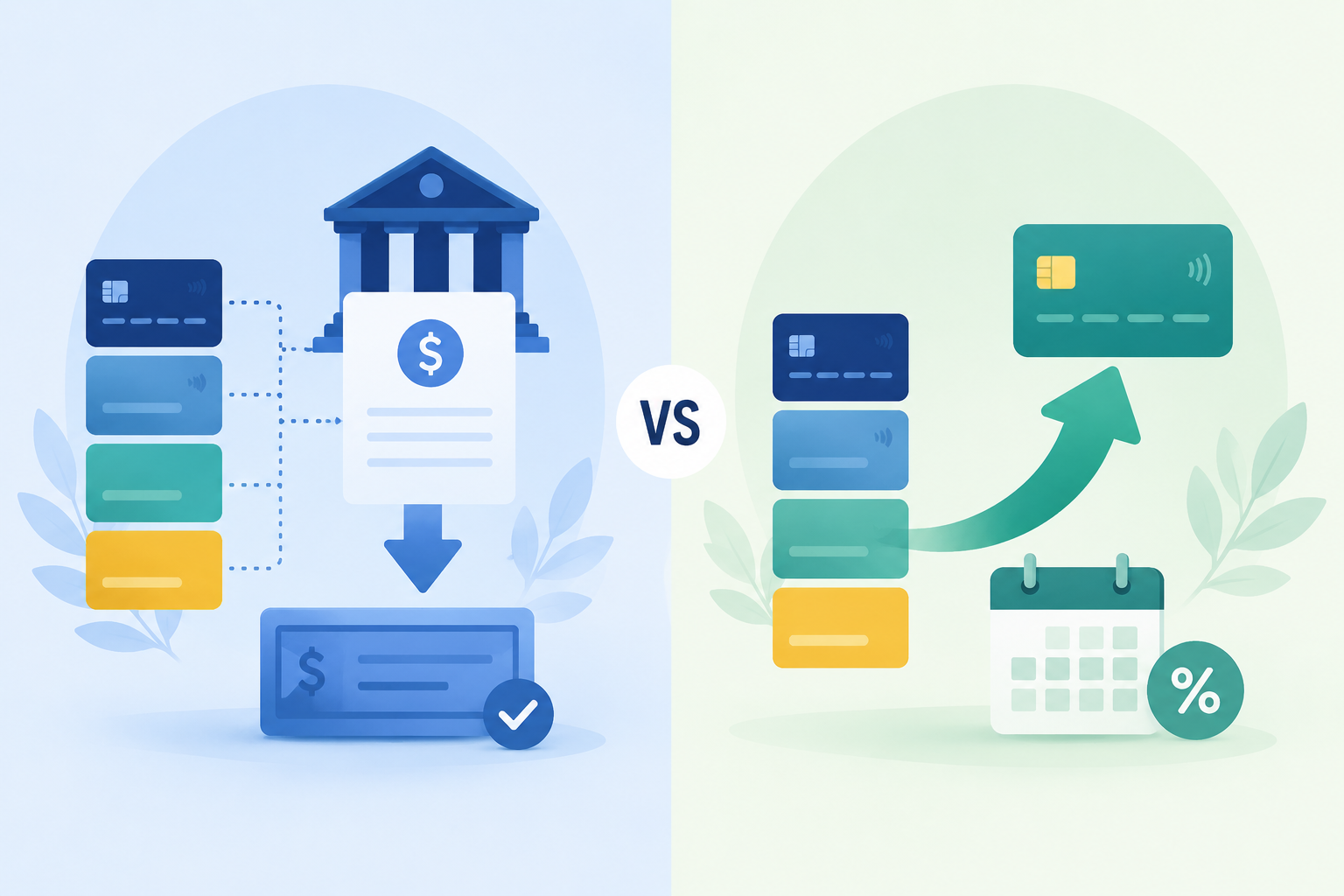
When you are carrying multiple debts and trying to figure out the fastest, smartest way to become debt free, two competing strategies almost always come up: the debt snowball method and the debt avalanche method. Both approaches involve paying more than the minimum on one target debt while maintaining minimum payments on everything else, but they differ in which debt you tackle first, and that single difference can significantly affect both how much interest you pay overall and how motivated you stay throughout the process. This guide explains exactly how each method works, the math behind them, and how to decide which strategy fits your personality and financial situation best.
What Is the Debt Snowball Method Exactly?
The debt snowball method involves listing all of your debts from smallest balance to largest, regardless of the interest rate each one carries, and then directing any extra money you can find each month toward paying off the smallest balance first while making only minimum payments on every other debt. Once that smallest debt is fully paid off, you take the entire payment you were making on it and add it to the minimum payment on the next smallest debt.
This process creates a snowball effect, where each debt you eliminate frees up more money to throw at the next target, and the payments grow larger and faster as you work your way up the list. Popularized by financial personality Dave Ramsey, this method is specifically designed around behavioral psychology rather than pure mathematics, prioritizing quick, visible wins to keep you motivated.
What Is the Debt Avalanche Method Exactly?
The debt avalanche method takes a different approach, ordering your debts from highest interest rate to lowest interest rate, completely ignoring the balance size. You direct all extra payments toward the debt with the highest interest rate first, while paying minimums on everything else, and once that debt is eliminated, you move to the next highest interest rate debt.
Because you are always attacking the debt that is costing you the most in interest charges, the avalanche method is mathematically guaranteed to save you more money in total interest paid compared to the snowball method, assuming you stick with the plan consistently over time. This makes it the more efficient choice from a pure numbers perspective.
Which Method Saves You More Money Overall?
In virtually every scenario, the debt avalanche method will save you more money in total interest paid over the life of your debt payoff journey, since you are always targeting the most expensive debt first. The size of this savings depends heavily on how much variation exists between the interest rates on your different debts.
If you have several debts with wildly different interest rates, such as a high interest credit card alongside a low interest auto loan, the avalanche method's savings can be substantial, sometimes amounting to hundreds or even thousands of dollars depending on your total debt load and how long it takes you to pay everything off. If your interest rates are all fairly similar, the difference in total interest between the two methods will be much smaller.
Which Method Keeps People More Motivated Over Time?
The debt snowball method is specifically designed to generate quick psychological wins by eliminating smaller debts first, which can provide a powerful sense of accomplishment and momentum early in your debt payoff journey. For many people, this early motivation boost is the difference between sticking with a plan long enough to succeed and giving up after a few discouraging months.
Behavioral finance research has consistently shown that people who use methods generating early visible progress are often more likely to stay committed to their overall debt payoff plan than those using a purely mathematically optimal approach that might not show meaningful progress for a long time if their highest interest debt also happens to have a large balance.
How Do You Calculate Which Method Is Right for Your Specific Debts?
To compare the two methods for your own situation, start by listing every debt you owe along with its current balance, interest rate, and minimum monthly payment. Then calculate how much extra money you can realistically direct toward debt payoff each month beyond the minimum payments required across all your accounts.
Several free online calculators allow you to input this information and see a side by side comparison of how long each method would take and how much total interest you would pay under each approach. Running these numbers for your specific debts, rather than relying on generic advice, will give you a much clearer picture of exactly how much the choice between methods matters for your particular situation.
Does the Size Difference Between Your Debts Affect Which Method You Should Choose?
If your smallest debt also happens to carry your highest interest rate, the choice becomes easy, since both methods would have you tackle that same debt first. The real decision only matters when your highest interest debt and your smallest balance debt are different accounts, forcing you to choose between quick psychological wins and mathematical efficiency.
Generally speaking, the smaller the gap between your interest rates across different debts, the more sense it makes to choose the snowball method for the motivational benefits, since you are giving up relatively little in extra interest costs. When interest rate differences are large, the avalanche method's savings become harder to ignore from a purely financial standpoint.
Can You Combine Elements of Both Methods Into a Hybrid Approach?
Some people choose a hybrid approach, sometimes informally called the debt tsunami or blended method, where they consider both balance size and interest rate together when deciding which debt to prioritize. This might mean paying off a small debt first for a quick motivational win, then switching to a strict avalanche approach for the remaining debts.
This flexible approach can work well for people who want some of the psychological benefits of the snowball method without fully sacrificing the interest savings offered by the avalanche method. The key is to make a deliberate, informed choice about your order of debts rather than paying them off in a random or reactive order based on which bill happens to arrive first each month.
How Does Your Personality Type Influence Which Method Will Work Best?
People who have struggled in the past to stay committed to long term financial goals, or who have tried and abandoned debt payoff plans before, often benefit more from the snowball method's structure of frequent, tangible progress. Seeing debts disappear from your list entirely, even small ones, can build the confidence and habit needed to tackle larger challenges later.
On the other hand, people who are naturally motivated by numbers, efficiency, and long term optimization, and who do not need frequent small wins to stay on track, often find the avalanche method more satisfying, since they can see the immediate logic in always attacking the most expensive debt first regardless of its size.
What Role Does Total Debt Amount Play in Choosing a Strategy?
People with a smaller number of debts and a manageable total balance may find that the difference between the two methods is relatively minor in terms of total time and interest, making the choice more about personal preference than financial necessity. In these cases, choosing whichever method feels more motivating is a perfectly reasonable decision.
For people carrying a larger number of debts with significant balances and highly variable interest rates, the financial stakes of choosing the wrong method become considerably higher, and running the actual numbers becomes more important before committing to either approach, since the potential interest savings from choosing the avalanche method can be substantial in these more complex situations.
Should You Consider Debt Consolidation Instead of Either Method?
Debt consolidation, which involves combining multiple debts into a single new loan or balance transfer card with a lower overall interest rate, can sometimes be a more effective strategy than either the snowball or avalanche method, particularly if you qualify for a significantly lower interest rate than what you are currently paying across your existing debts.
That said, consolidation only helps if you avoid accumulating new debt on the accounts you just paid off, and if the fees associated with consolidation do not outweigh the interest savings. Many people use consolidation as a complementary tool alongside a snowball or avalanche strategy, rather than as a complete replacement for disciplined debt payoff habits.
How Do You Stay Motivated During a Long Debt Payoff Journey?
Regardless of which method you choose, tracking your progress visually, whether through a spreadsheet, an app, or even a simple paper chart on your refrigerator, can help maintain motivation throughout a payoff journey that might take several years to complete. Seeing your total debt balance shrink over time provides ongoing reinforcement even between individual debt payoffs.
Celebrating milestones along the way, such as paying off your first debt entirely or reaching the halfway point of your total debt balance, can also help sustain motivation during the inevitable moments when progress feels slow. Building small, meaningful rewards into your plan, without derailing your budget, can make the entire process feel more sustainable over the long run.
What Mistakes Commonly Derail a Debt Snowball or Avalanche Plan?
One of the most common mistakes is failing to build even a small emergency fund before aggressively paying down debt, which often leads people to rely on credit cards again the moment an unexpected expense arises, effectively undoing much of their progress. Most financial experts recommend building a modest starter emergency fund before committing fully to either payoff method.
Another frequent mistake is continuing to use credit cards for regular spending while simultaneously trying to pay down existing balances, which can make it feel like you are running on a treadmill without ever making real progress. Committing to a spending freeze on any debt you are actively paying off is essential for either method to work as intended.
How Do These Methods Handle Different Types of Debt, Like Student Loans or Medical Bills?
Student loans and medical debt often carry different characteristics than credit card debt, such as lower interest rates, flexible repayment plans, or even the possibility of negotiation and settlement in the case of medical bills. When applying either the snowball or avalanche method, it is important to factor in these unique characteristics rather than treating every debt exactly the same.
For example, federal student loans often have relatively low, fixed interest rates and may offer income driven repayment options or forgiveness programs that change the calculation entirely, so it may make sense to exclude them from an aggressive avalanche or snowball strategy and instead focus extra payments on higher interest, less flexible debts like credit cards first.
How Does Interest Rate Type, Fixed Versus Variable, Affect Your Strategy?
Some debts carry variable interest rates that can rise or fall over time based on broader economic conditions, while others carry fixed rates that remain constant for the life of the loan. A debt with a variable rate that is currently low but could rise significantly deserves extra attention, since the avalanche method's ranking based on current interest rate might understate the future risk of that particular debt.
When building your payoff order, it can be wise to consider not just today's interest rate but also the likelihood that a variable rate debt could become considerably more expensive in the future, potentially justifying prioritizing it earlier than a strict avalanche ranking based solely on current rates would suggest.
Should You Adjust Your Extra Payments as Your Income Changes?
Your ability to make extra payments toward your target debt will likely fluctuate as your income changes, whether due to a raise, a bonus, a job loss, or seasonal work patterns. Building flexibility into your debt payoff plan, rather than committing to a rigid fixed extra payment amount indefinitely, allows you to accelerate progress during strong months and protect yourself during leaner ones.
Many people find it helpful to set a baseline extra payment they can commit to even during their leanest months, while planning to direct any windfalls, such as a tax refund or work bonus, entirely toward their current target debt to accelerate progress whenever extra money becomes available beyond their regular budget.
How Do You Know When It Is Time to Stop and Reassess Your Plan?
Life circumstances change, and a debt payoff plan that made sense a year ago might no longer fit your current situation if your income, expenses, or financial goals have shifted significantly. Reviewing your debt payoff plan at least once or twice a year, or after any major life change, helps ensure your strategy still aligns with your actual circumstances.
If you find yourself consistently unable to make the extra payments your plan calls for, it may be worth revisiting your budget, considering whether a hybrid approach might work better, or exploring whether consolidation or refinancing could reduce your interest costs enough to make your existing payment amount more effective at reducing your overall balance.
Frequently Asked Questions About Debt Snowball and Debt Avalanche Methods
Below are answers to some of the most frequently asked questions about choosing and using these two popular debt payoff strategies.
Can I switch from the snowball method to the avalanche method partway through my payoff journey?
Yes, there is no rule preventing you from switching strategies partway through, and some people intentionally start with the snowball method for early motivation before switching to the avalanche method once they have built momentum and confidence in their ability to stick with a plan.
Does either method affect my credit score differently?
Both methods have a similar effect on your credit score over time, since what matters most for your score is making consistent on time payments and gradually reducing your overall debt balances, regardless of which specific order you pay off individual accounts.
How much extra money do I need to make either method work?
Even a relatively small amount of extra money applied consistently each month can make a meaningful difference over time, though larger extra payments will naturally accelerate your progress and increase the total interest savings, particularly with the avalanche method.
Is one method better if I only have credit card debt?
When all your debts are credit cards with similar interest rates, the practical difference between the two methods shrinks considerably, making the choice more about which approach will keep you personally motivated to stick with your payoff plan long term, rather than which one saves a meaningfully larger amount of money in total interest charges.
Ultimately, neither the debt snowball nor the debt avalanche method is universally correct, since the best strategy is the one you will actually stick with consistently until your debt is fully paid off, and understanding the tradeoffs between motivation and mathematical efficiency will help you choose the approach that fits your unique financial situation and personality best over the months and years ahead, whichever path you ultimately decide to follow toward a debt free future.