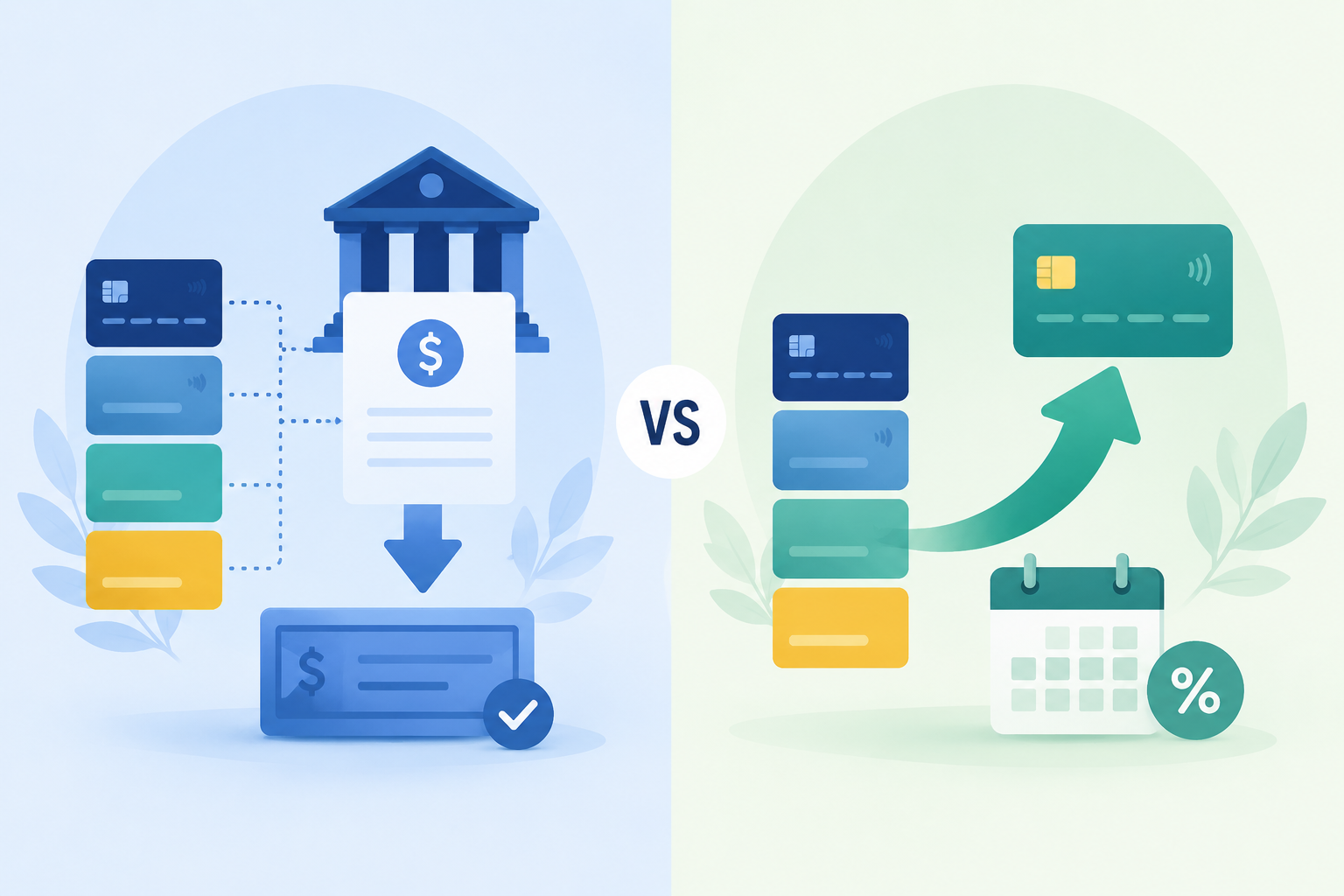
Student loan refinancing has become an increasingly popular strategy for borrowers looking to lower their interest rate, reduce their monthly payment, or simplify multiple loans into a single new one. However, refinancing is not a decision to take lightly, especially when your original loans include federal student loans, since refinancing through a private lender permanently converts federal debt into private debt and eliminates certain protections along the way. This guide walks through exactly how refinancing works, what separates federal loans from private loans, and how to determine whether refinancing makes sense for your particular financial situation.
What Does It Mean to Refinance a Student Loan?
Refinancing a student loan means taking out an entirely new loan, typically through a private lender, to pay off one or more existing student loans, ideally at a lower interest rate or with more favorable repayment terms than your original loans carried. The new loan replaces your old loans completely.
Refinancing is different from federal loan consolidation, which combines multiple federal loans into a single federal loan without necessarily changing your interest rate, since consolidation simply calculates a weighted average of your existing rates rather than offering a genuinely new, potentially lower rate based on your current creditworthiness.
What Is the Core Difference Between Federal and Private Student Loans?
Federal student loans are issued or guaranteed by the United States Department of Education and come with a standardized set of borrower protections, including income driven repayment plans, deferment and forbearance options, and potential loan forgiveness programs for qualifying borrowers in public service or other specific circumstances.
Private student loans, by contrast, are issued by banks, credit unions, or specialized lending companies, with terms set individually by each lender based on your credit profile. Private loans generally lack the flexible government backed protections available to federal borrowers, though they can sometimes offer lower interest rates for highly qualified applicants.
What Protections Do You Lose When Refinancing Federal Loans Into a Private Loan?
When you refinance a federal loan into a private loan, you permanently give up access to federal income driven repayment plans, which cap your monthly payment based on your income and family size, along with any potential eligibility for federal loan forgiveness programs tied specifically to federal loan status.
You also lose access to federal deferment and forbearance options, which can pause your payments during periods of financial hardship, unemployment, or economic emergencies, since private lenders typically offer far more limited hardship options, if any at all, compared to the federal government's borrower protections.
Who Is a Good Candidate for Student Loan Refinancing?
Borrowers with stable, reliable income, strong credit scores, and private student loans, or federal loans they are confident they will never need income driven repayment or forgiveness protections for, are generally the best candidates for refinancing, since they stand to benefit from a lower rate without meaningfully risking valuable federal protections.
Borrowers pursuing Public Service Loan Forgiveness, working in careers with uncertain future income, or those who value the safety net of income driven repayment plans should think very carefully before refinancing federal loans, since those benefits cannot be recovered once a federal loan has been refinanced into a private one.
How Does Your Credit Score Affect Your Refinancing Rate?
Private lenders evaluate your credit score, income, employment history, and existing debt obligations when determining both your eligibility for refinancing and the interest rate you will be offered, meaning borrowers with excellent credit and stable income typically qualify for the most competitive rates available.
If your credit profile is still developing or your income is inconsistent, you may either be denied refinancing altogether or offered a rate that is not meaningfully better than what you are already paying, making it worthwhile to check your credit standing before applying with any specific lender.
Can You Refinance With a Cosigner to Get a Better Rate?
Yes, many private lenders allow you to apply with a creditworthy cosigner, such as a parent or spouse, which can help you qualify for a lower interest rate than you might receive on your own, particularly if your personal credit history is still relatively short or your income is on the lower side.
Some lenders also offer a cosigner release option after a certain number of consecutive on time payments, allowing the cosigner to be removed from the loan once you have demonstrated a solid repayment track record independently, though the specific requirements vary considerably from one lender to another.
Should You Choose a Fixed Rate or Variable Rate When Refinancing?
Fixed rate loans keep the same interest rate for the entire repayment term, offering predictable monthly payments regardless of what happens with broader interest rate trends, while variable rate loans typically start lower but can rise or fall over time based on an underlying benchmark rate.
If you plan to pay off your loan relatively quickly or believe rates are likely to stay flat or decline, a variable rate might save you money, but if you prefer payment predictability or plan to carry the loan for many years, a fixed rate generally offers more peace of mind against future rate increases.
How Much Can You Realistically Save by Refinancing?
The potential savings from refinancing depend heavily on the difference between your current interest rate and the new rate you qualify for, as well as your remaining loan balance and repayment term, meaning borrowers with high original rates and large balances often see the most substantial savings.
Many online student loan refinancing calculators let you estimate your potential monthly payment and total interest savings before formally applying, giving you a useful benchmark for deciding whether the savings are significant enough to justify giving up any federal protections tied to your existing loans.
Can You Refinance Only Some of Your Student Loans?
Yes, you are not required to refinance every student loan you hold at once. Many borrowers choose to refinance only their private loans, or only the federal loans they are confident they will not need special protections for, while leaving other federal loans untouched to preserve access to income driven repayment options.
This selective approach allows you to capture interest savings on the loans where refinancing makes clear sense, while still maintaining a safety net through your remaining federal loans in case your income or employment situation changes unexpectedly in the future.
What Happens to Your Loan Term When You Refinance?
When refinancing, you typically have the option to choose a new repayment term, which might be shorter or longer than your original loan's remaining term, directly affecting both your new monthly payment amount and the total amount of interest you will pay over the life of the refinanced loan.
Choosing a shorter term generally increases your monthly payment but reduces total interest paid, while a longer term lowers your monthly payment but increases total interest costs, so it is worth carefully weighing your monthly cash flow needs against your long term interest savings goals when selecting a new term.
Does Refinancing Affect Your Credit Score?
Applying for refinancing typically involves a hard credit inquiry, which can cause a small, temporary dip in your credit score, similar to applying for any other type of loan. Many lenders offer a prequalification process using a soft inquiry, letting you check estimated rates without affecting your score.
Over time, successfully managing a refinanced loan with consistent on time payments can actually benefit your credit profile, since it demonstrates responsible management of installment debt, and closing out multiple older loans in favor of a single new one can also simplify your overall credit picture going forward.
What Fees Are Typically Associated With Student Loan Refinancing?
Most reputable student loan refinancing lenders do not charge origination fees, application fees, or prepayment penalties, making refinancing generally less costly upfront compared to some other types of loans, though it is always worth carefully reviewing the specific fee disclosures for any lender you are considering.
Some lenders offer rate discounts for enrolling in automatic payments, so it is worth asking about any available discounts that could further reduce your effective interest rate beyond the base rate initially quoted to you during the application and approval process.
Can Parent PLUS Loans Be Refinanced?
Yes, Parent PLUS loans, which are federal loans taken out by parents on behalf of a dependent student, can be refinanced through private lenders, either kept in the parent's name or, with certain lenders, transferred into the student's name through a specialized refinancing product.
Refinancing a Parent PLUS loan into the student's name can be an appealing option for families who initially took out the loan under the parent's name for practical reasons but always intended for the student to eventually take over responsibility for repayment once they were financially established.
What Happens if You Lose Your Job After Refinancing?
Because private refinanced loans generally lack the robust deferment and forbearance options available to federal loans, losing your job after refinancing can be considerably more stressful, since your options for temporarily pausing or reducing payments may be limited to whatever hardship program your specific private lender chooses to offer.
Before refinancing, it is worth asking any lender you are considering directly about their hardship policies and any temporary payment relief options they offer, since these policies vary significantly between lenders and could matter considerably if your income situation changes unexpectedly down the road.
How Do You Compare Multiple Refinancing Offers Effectively?
When comparing refinancing offers, look beyond just the advertised interest rate and consider the full picture, including whether the rate is fixed or variable, the available repayment term lengths, any discounts for automatic payments, and each lender's specific hardship or forbearance policies in case of future financial difficulty.
Getting prequalified with several lenders using a soft credit check allows you to compare realistic rate estimates side by side without any impact on your credit score, making it easier to identify the genuinely best offer before committing to a formal application that will involve a hard credit inquiry.
Is Refinancing Reversible if You Change Your Mind Later?
No, once you refinance a federal loan into a private loan, that decision cannot be reversed, meaning you cannot later convert the private loan back into a federal loan to regain access to income driven repayment plans or federal forgiveness programs, even if your circumstances change significantly afterward.
This permanence is precisely why financial advisors generally recommend refinancing federal loans only when you are highly confident you will not need federal specific protections in the future, since the potential downside of losing those protections can outweigh modest interest rate savings for many borrowers.
Should You Wait for Better Rates Before Refinancing?
Interest rates for refinancing fluctuate based on broader economic conditions and each lender's individual pricing strategy, so timing the market perfectly is difficult. Instead of waiting indefinitely for the theoretically best possible rate, focus on comparing current offers against your existing loan terms to determine if meaningful savings exist today.
If your existing loans already carry historically low rates from a prior favorable refinancing or federal program, it may make more sense to wait and monitor rates periodically rather than refinancing again immediately, particularly if current offers would not represent a meaningful improvement over your existing terms.
What Documents Do You Need to Apply for Refinancing?
Most lenders require proof of income, such as recent pay stubs or tax returns, proof of identity, information about your existing student loans, and details about your employment status, so gathering these documents in advance can help streamline the application process across multiple lenders you are comparing.
Self employed borrowers or those with variable income may need to provide additional documentation, such as several years of tax returns or bank statements, since lenders typically want reassurance of consistent income capacity before extending a favorable refinancing offer to non traditionally employed applicants.
How Does Refinancing Affect Cosigners on Your Original Loans?
If your original private student loans had a cosigner, refinancing into a brand new loan gives you the opportunity to either release that original cosigner entirely by qualifying on your own credit and income, or to bring on a new cosigner if you still need additional support to secure the most favorable rate available.
This can be an appealing reason to refinance on its own, separate from any interest rate savings, since it allows you to formally release a parent or family member from financial responsibility for your original loans once your own credit and income have grown strong enough to qualify independently.
Frequently Asked Questions About Student Loan Refinancing
Below are answers to some of the most common questions people have about refinancing federal and private student loans.
Can I refinance my student loans more than once?
Yes, there is generally no limit to how many times you can refinance, so if rates drop further or your credit profile improves significantly after your first refinance, you can refinance again to capture additional savings, as long as you continue to qualify with a given lender.
Does refinancing extend my repayment timeline automatically?
Not necessarily, since you typically choose your new repayment term during the refinancing process, meaning you can select a term that is shorter, the same length, or longer than your original remaining term, depending entirely on your personal monthly payment and total interest cost goals.
Is it possible to refinance while still in school?
Most lenders require you to have graduated before refinancing, though a small number of lenders do offer refinancing options for borrowers still enrolled, particularly those in professional programs with strong future earning potential, such as medical or law school students nearing graduation.
What credit score do I need to qualify for refinancing?
Requirements vary by lender, but generally a credit score in the high six hundreds or above improves your chances of approval and access to competitive rates, while borrowers with lower scores may still qualify with a strong cosigner or by improving their credit before applying.
Will refinancing affect my ability to claim the student loan interest tax deduction?
No, interest paid on a refinanced student loan generally remains eligible for the same federal student loan interest tax deduction, subject to the standard income limits and eligibility rules that apply to student loan interest regardless of whether the loan is federal or refinanced through a private lender.
Can I switch lenders again if a better refinancing offer appears later?
Yes, you are free to refinance with a different lender at any point in the future if your credit profile improves or a more competitive offer becomes available, since there is no contractual obligation preventing you from refinancing your current refinanced loan again down the road.
Student loan refinancing can be a genuinely valuable tool for reducing your interest rate and simplifying your repayment, but it comes with a permanent tradeoff for federal borrowers who give up valuable government backed protections in the process. By carefully evaluating your income stability, future career plans, and realistic need for programs like income driven repayment or forgiveness, you can make a refinancing decision that truly serves your long term financial wellbeing as a borrower.