Most retirement savers assume their IRA can only hold stocks, bonds, and mutual funds, but IRS rules actually allow a properly structured IRA to hold real estate directly. This vehicle, known as a self directed IRA, lets investors buy rental properties, raw land, or even private real estate notes inside a tax advantaged retirement account. The rules governing self directed IRAs are strict, the prohibited transaction penalties are severe, and the administrative burden is real, but for the right investor this structure can meaningfully accelerate tax deferred or tax free real estate wealth building. This guide walks through how self directed IRAs work, the rules you must follow, and the mistakes that trigger the harshest penalties.
What Makes an IRA Self Directed
Every IRA is technically self directed in the sense that the account owner chooses the investments, but the term self directed IRA specifically refers to accounts held by a custodian who permits alternative assets such as real estate, private company shares, or precious metals, rather than the narrow menu of publicly traded securities offered by a typical brokerage IRA custodian.
Traditional brokerage firms like the large national custodians generally do not support real estate holdings inside an IRA, so investors must open an account with a specialized self directed IRA custodian that has the systems in place to hold title to real property, process rental income, and pay property related expenses on the IRA's behalf.
How the IRA Actually Owns the Property
When a self directed IRA purchases real estate, the property title is held in the name of the IRA custodian for the benefit of the IRA, not in the account owner's personal name, since the IRA itself is the legal owner of the asset for as long as it remains inside the retirement account.
All income the property generates, including rent payments, flows directly into the IRA, and all expenses, including property taxes, insurance, and repairs, must be paid directly from IRA funds rather than the account owner's personal checking account, since mixing personal and IRA funds is one of the most common ways investors accidentally trigger a prohibited transaction.
Prohibited Transactions You Must Avoid
The IRS prohibits an IRA from engaging in transactions with disqualified persons, which includes the account owner, the owner's spouse, ancestors, descendants, and any entities those people control, meaning you cannot buy a property from yourself, sell a property to your child, or rent an IRA owned property to a parent.
You also cannot personally use or benefit from IRA owned real estate in any way, so staying at your IRA's vacation rental property for even a single weekend, or personally performing repairs on the property yourself instead of hiring a contractor paid from IRA funds, both constitute prohibited transactions that can disqualify the entire account.
Consequences of a Prohibited Transaction
If the IRS determines that a prohibited transaction occurred, the entire IRA is treated as distributed as of the first day of the year the violation happened, meaning the full fair market value of the account becomes immediately taxable as ordinary income, plus a ten percent early withdrawal penalty if the account owner is under fifty nine and a half.
This all or nothing penalty structure is what makes self directed real estate investing so unforgiving compared to a standard brokerage IRA, since a single innocent mistake, such as paying a contractor's invoice from a personal credit card by accident, can technically disqualify the entire retirement account, not just the specific property involved.
Funding the Purchase Inside the IRA
The IRA must have sufficient cash on hand to complete the purchase along with a reasonable reserve for ongoing expenses, since the account owner cannot simply write a personal check to cover a shortfall at closing or to pay an unexpected repair bill, as that would constitute a prohibited contribution outside normal IRA contribution limits.
Investors with insufficient IRA cash sometimes use a non recourse loan to fund part of the purchase, since IRAs are legally barred from personally guaranteeing debt, meaning the loan must be secured solely by the property itself with no recourse against the IRA owner personally if the loan defaults.
Non Recourse Loans and Unrelated Debt Financed Income Tax
When a self directed IRA uses debt to finance a real estate purchase, a portion of the income and eventual gain becomes subject to unrelated debt financed income tax, commonly called UDFI, which is calculated based on the percentage of the purchase that was financed with borrowed money rather than IRA cash.
UDFI can meaningfully reduce the tax advantages of using leverage inside a self directed IRA, and the tax is owed by the IRA itself, requiring the account to file its own tax return, so investors considering a leveraged purchase inside an IRA should model out the after tax impact carefully before proceeding.
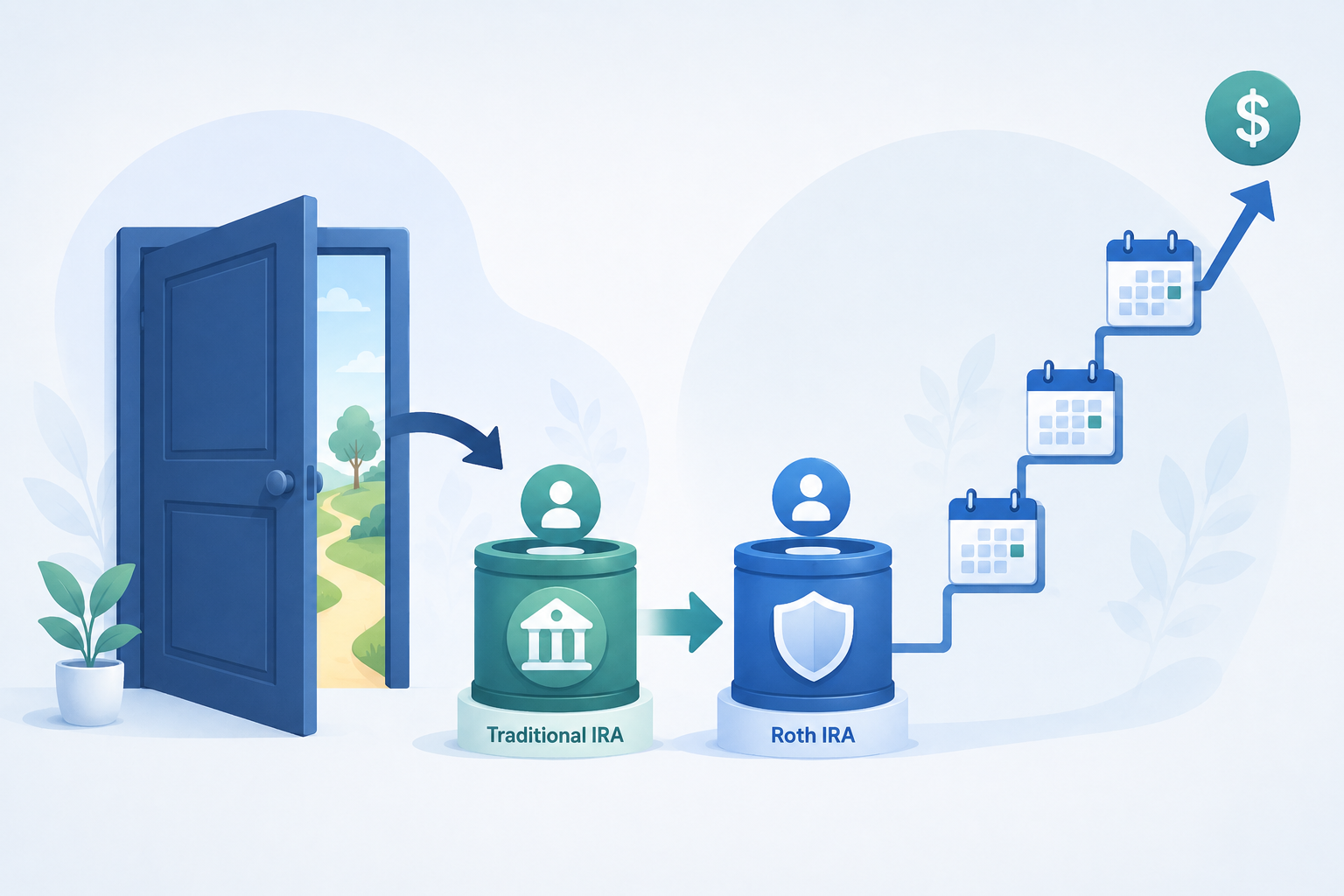
Roth Self Directed IRA vs Traditional Self Directed IRA
A traditional self directed IRA defers taxes until distribution, meaning rental income and eventual sale proceeds grow tax deferred but are taxed as ordinary income when withdrawn in retirement, similar to how a traditional IRA holding stocks would be taxed upon distribution.
A Roth self directed IRA, funded with after tax contributions or converted from a traditional account, allows rental income and property appreciation to grow completely tax free, provided the account meets the standard Roth holding period and age requirements at the time of distribution, making it particularly powerful for a long term buy and hold rental strategy.
Choosing a Self Directed IRA Custodian
Custodian fees for self directed IRAs typically run higher than a standard brokerage IRA, often including an account setup fee, an annual administration fee based on account value or a flat rate, and per transaction fees for processing rent deposits, paying bills, or handling a property purchase or sale.
Not all custodians offer the same level of real estate specific support, so investors should ask specifically about the custodian's experience processing rental income, handling property tax and insurance payments, and coordinating with title companies during a purchase or sale before committing to a particular provider.
Using an IRA Owned LLC for Real Estate
Some investors establish an LLC owned entirely by their self directed IRA, commonly called a checkbook IRA, which gives the account owner direct signing authority over an LLC bank account to pay property expenses without routing every single transaction through the custodian for approval.
This structure can meaningfully speed up day to day property management since the investor can write a check for an urgent repair immediately rather than waiting for custodian approval each time, but it also increases the investor's personal responsibility for avoiding prohibited transactions, since there is no custodian reviewing each individual transaction before it happens.
Property Management Considerations
Since the account owner cannot personally manage or perform work on an IRA owned property, most investors hire a third party property manager to handle tenant relations, rent collection, and maintenance coordination, with the property manager's fees paid directly from IRA funds.
Finding a property manager comfortable working within self directed IRA rules, including directing rent payments to the IRA custodian or IRA owned LLC account rather than the investor personally, is an important part of successfully operating a rental property inside a retirement account long term.
Required Minimum Distributions and Illiquid Real Estate
Traditional self directed IRAs are subject to required minimum distributions beginning at the applicable age set by current law, and a real estate holding creates a unique challenge since the account may not have enough cash on hand to satisfy the distribution without selling all or part of the property.
Investors approaching required minimum distribution age should plan ahead, either by maintaining sufficient cash reserves inside the IRA, arranging a partial ownership transfer, or planning a property sale timeline that lines up with when distributions will be required, since selling a property under time pressure to meet a distribution deadline rarely produces the best sale price.
Estate Planning With a Self Directed IRA
Real estate held inside a self directed IRA passes to beneficiaries according to the IRA's beneficiary designation, not through a will, which means keeping beneficiary designations current is especially important for an account holding a significant real estate asset rather than easily divisible securities.
Beneficiaries who inherit an IRA containing real estate face the same prohibited transaction rules the original owner faced, plus the practical challenge of managing an illiquid asset within required distribution timelines for inherited IRAs, which is a consideration worth discussing with an estate planning attorney well before the account owner's death.
Is a Self Directed IRA Right for Your Real Estate Strategy
Self directed IRAs tend to work best for buy and hold investors with a long time horizon who want tax deferred or tax free growth on a specific property and who are disciplined enough to strictly separate personal involvement from the IRA owned asset at every step.
Active investors who want to personally renovate properties, actively manage tenants themselves, or frequently buy and sell properties are often better served keeping real estate outside their IRA entirely, since the prohibited transaction rules make hands on involvement legally risky in a way that passive, professionally managed rental ownership is not.
Recordkeeping and Documentation Requirements
Every expense paid on behalf of an IRA owned property, every rent payment received, and every contractor invoice must be documented and paid directly through the IRA custodian or IRA owned LLC account, creating a paper trail that clearly separates all IRA activity from the account owner's personal finances at all times.
Investors who fail to maintain clean, separate records for their IRA owned property put themselves at much greater risk during an IRS audit, since the burden of proving that no prohibited transaction occurred falls on the account owner, and commingled or poorly documented transactions make that burden far harder to satisfy convincingly.
Comparing Self Directed IRA Real Estate to Direct Ownership
Owning rental property directly, outside of any retirement account, gives an investor full flexibility to manage the property personally, deduct depreciation against current income, and use a 1031 exchange to defer gains indefinitely across multiple properties over a lifetime of investing.
Owning the same property inside a self directed IRA sacrifices some of that flexibility and the ability to deduct depreciation against outside income, but in exchange the investor gains tax deferred or tax free growth on the entire investment, an advantage that can outweigh the lost flexibility for investors with a genuinely long term, hands off holding strategy.
Working With Professionals Before You Buy
Given the severity of the all or nothing prohibited transaction penalty, most experienced self directed IRA investors involve a specialized attorney or CPA before completing their first real estate purchase inside the account, specifically to review the planned property use, financing structure, and any relationships with contractors or property managers who might be considered disqualified persons.
This upfront review typically costs far less than the potential tax consequences of an accidental disqualification, and it also gives the investor a clear reference point to return to whenever a new situation arises, such as bringing on a new property manager or considering a renovation that might blur the line on personal involvement.
Frequently Asked Questions
Can I use my self directed IRA to buy a vacation home I plan to eventually retire into?
Not while the property remains inside the IRA, since personal use of any kind by the account owner or a disqualified person constitutes a prohibited transaction, though some investors plan an eventual distribution of the property from the IRA to themselves once they reach retirement age, at which point ordinary income tax applies to the distributed value.
Can my self directed IRA partner with me personally to buy a property together?
This is possible in limited circumstances but is one of the riskiest structures under prohibited transaction rules, since ongoing transactions between the IRA and the disqualified account owner, such as splitting expenses or profits, can easily cross into prohibited territory, so most advisors recommend avoiding joint ownership between an IRA and its own account holder.
How is rental income from an IRA owned property reported on my personal tax return?
It generally is not reported on your personal return at all, since the income belongs to the IRA and grows tax deferred or tax free depending on account type, though the IRA itself may need to file a return if unrelated debt financed income tax applies due to leveraged financing.
Can I do a 1031 exchange with real estate held inside a self directed IRA?
No, a 1031 exchange is unnecessary and inapplicable inside an IRA, since the account already grows tax deferred or tax free regardless of how many times the underlying real estate is bought and sold within the account.
What happens if my self directed IRA runs out of cash to cover a large repair bill?
The IRA must generate the needed cash through other means, such as selling another asset held in the account or, in some cases, obtaining a non recourse loan, since the account owner cannot personally contribute funds outside normal annual IRA contribution limits to cover a shortfall.
Is a self directed IRA the same as a solo 401k for real estate investing?
No, though both allow real estate investment, a solo 401k is only available to self employed individuals with no full time employees and offers higher contribution limits along with a built in exemption from unrelated debt financed income tax on leveraged real estate, making it a meaningfully different vehicle from a self directed IRA.
Can I convert a traditional IRA already holding real estate into a Roth self directed IRA?
Yes, a conversion is possible, but the fair market value of the real estate at the time of conversion is treated as taxable income, so investors typically need an independent appraisal to establish an accurate value and should plan for the resulting tax bill before initiating the conversion, since the property itself is illiquid and cannot easily be partially sold to cover the tax owed.
Self directed IRAs open the door to a genuinely powerful strategy for long term real estate investors seeking tax advantaged growth outside the traditional stock and bond menu, but the strict prohibited transaction rules mean this structure rewards careful, hands off investors and severely punishes those who blur the line between personal and retirement account activity. Anyone considering this path should work with a custodian experienced in real estate, a tax professional familiar with self directed IRA rules, and ideally an attorney who can review the specific transaction structure before any money changes hands, since the cost of professional guidance up front is minor compared to the cost of an accidental prohibited transaction later. Approached carefully, with clean documentation and a clear separation between personal and retirement account activity maintained from day one, a self directed IRA can become one of the most tax efficient and durable ways to hold long term rental real estate for decades to come.