When you check your credit score through different apps, banks, or websites, you may notice the number varies depending on where you look, and this confusion often comes down to the difference between FICO Score and VantageScore, the two major credit scoring models used throughout the United States. While both scores aim to predict your creditworthiness using information from your credit report, they calculate that prediction using somewhat different methods, which can produce meaningfully different results. This guide explains exactly how each scoring model works, why your scores can differ between them, and which one actually matters most when you apply for credit.
What Is a FICO Score and Who Created It?
The FICO Score, created by the Fair Isaac Corporation, is the original and most widely used credit scoring model in the United States, dating back to the late 1980s. It remains the scoring model most commonly used by lenders when making decisions about mortgages, auto loans, and credit card applications.
FICO Scores range from 300 to 850, with higher scores indicating lower credit risk to lenders, and the company has released multiple versions of its scoring formula over the years, with different versions sometimes used depending on the type of credit product you are applying for and which credit bureau's data is being scored.
What Is VantageScore and How Does It Differ From FICO?
VantageScore is a competing credit scoring model created jointly by the three major credit bureaus, Equifax, Experian, and TransUnion, originally launched in 2006 partly in response to demand for an alternative to the FICO Score, with its own distinct methodology for calculating creditworthiness.
Like FICO, VantageScore also uses a 300 to 850 range in its most recent versions, but it applies somewhat different weighting to the factors used in calculating the score, and it has historically been more willing to generate a score for consumers with limited or thin credit files compared to certain versions of the FICO Score.
Why Do FICO Score and VantageScore Sometimes Show Different Numbers?
Even though both scoring models pull information from the same underlying credit report data, they weigh factors like payment history, credit utilization, and length of credit history somewhat differently, which can result in noticeably different scores even when calculated from the exact same credit report on the exact same day.
Additionally, since credit bureaus do not always have identical data on file for every consumer, a score calculated using Equifax data might differ from a score calculated using Experian or TransUnion data, adding another layer of variation beyond just the differences between the FICO and VantageScore models themselves.
Which Score Do Lenders Actually Use When Evaluating Applications?
The vast majority of lenders, particularly for major decisions like mortgage approvals, continue to rely primarily on some version of the FICO Score, since it remains the industry standard scoring model most deeply embedded into traditional lending decision processes across banks and credit unions nationwide.
VantageScore has gained meaningful adoption among certain lenders, particularly for online lenders, some credit card issuers, and increasingly for auto lending, though if you are applying for a mortgage specifically, it remains especially important to understand your FICO Score rather than relying solely on a VantageScore figure.
How Does Length of Credit History Affect Each Scoring Model Differently?
Older versions of the FICO Score generally required a longer credit history, often at least six months, before generating a usable score, which historically made it harder for people with limited credit history to obtain a FICO Score shortly after opening their first account.
VantageScore was specifically designed to generate scores more quickly for consumers with limited credit history, sometimes with as little as one month of credit activity, making it more accessible for younger borrowers or those newer to using credit, though newer FICO Score versions have also worked to address this same limitation.
How Do Both Scoring Models Treat Credit Utilization?
Both FICO Score and VantageScore consider credit utilization, meaning the percentage of your available credit that you are currently using, as one of the most heavily weighted factors in calculating your overall score, generally rewarding consumers who keep their utilization relatively low across their revolving credit accounts.
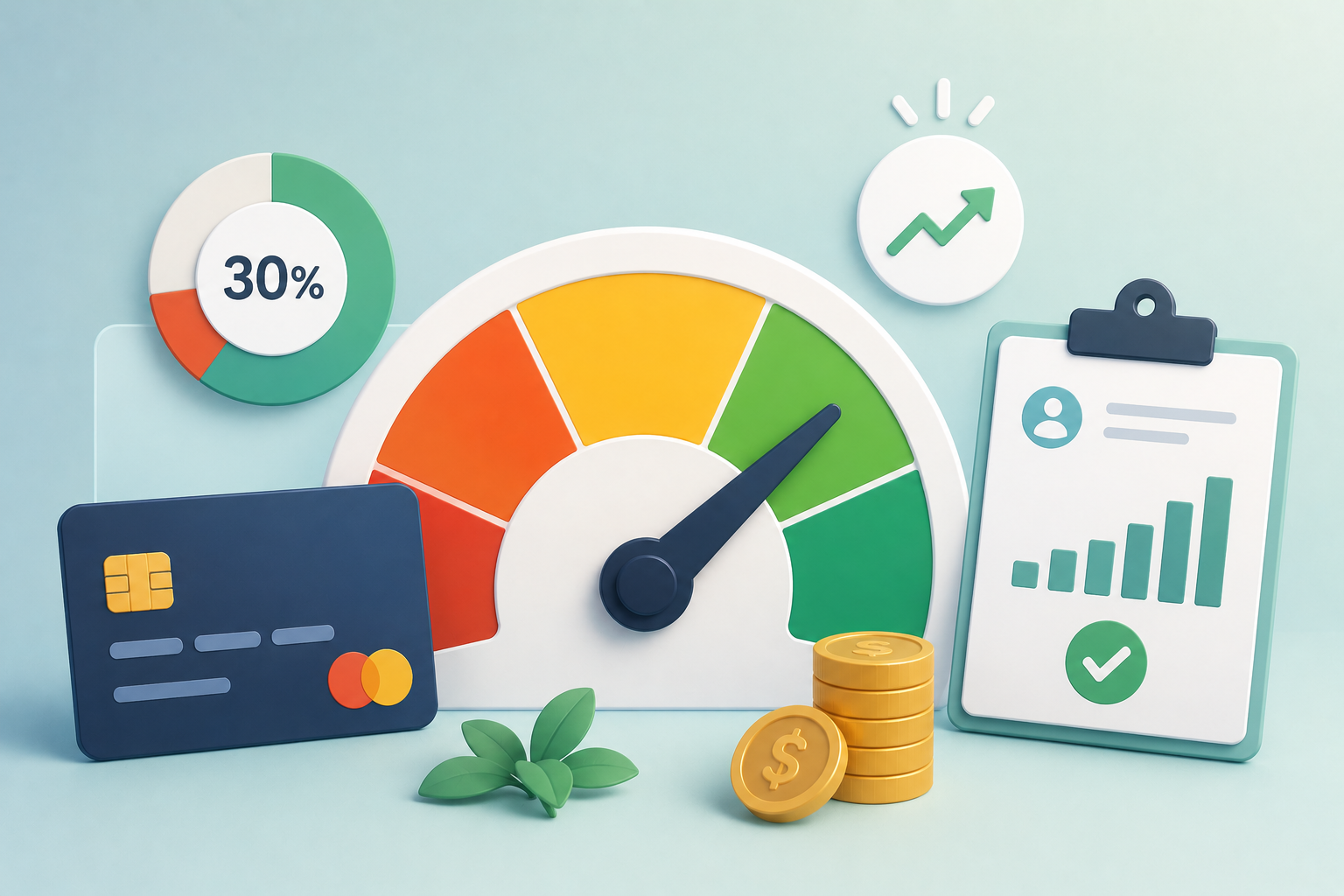
While the exact weighting differs somewhat between the two models, both consistently show that keeping your utilization below thirty percent, and ideally into the single digits, tends to produce meaningfully better scores under either scoring system compared to consumers who regularly carry high balances relative to their credit limits.
How Do Late Payments Affect FICO Score Versus VantageScore?
Payment history is the single most heavily weighted factor in both the FICO Score and VantageScore models, meaning a single missed payment reported as thirty days or more late can meaningfully damage your score under either scoring system, regardless of which specific model a lender happens to use.
Some differences exist in exactly how each model treats the recency and severity of late payments, with more recent late payments generally causing more damage than older ones under both systems, though the precise mathematical impact can vary somewhat between the two competing scoring models.
Can You Access Your FICO Score and VantageScore for Free?
Many credit card issuers and banks now provide free access to your credit score as a cardholder benefit, though it is worth checking whether the score provided is a FICO Score or a VantageScore, since the specific model offered varies considerably depending on which financial institution you use.
Several free credit monitoring services and apps also provide free VantageScore access, since these scores can often be provided at lower cost to the monitoring service compared to licensing FICO Score data, making VantageScore more commonly available through free consumer facing credit monitoring tools.
Do Different Versions of FICO Score Exist for Different Types of Loans?
Yes, FICO has released numerous different scoring versions over the years, and certain industries use specialized versions tailored to their specific lending decisions, such as auto industry specific FICO scores that place different weight on factors particularly relevant to predicting auto loan repayment behavior.
This means the FICO Score you see through a free credit monitoring app may not exactly match the specific FICO Score version a mortgage lender or auto lender actually pulls when evaluating your application, since lenders often use industry specific or older FICO versions rather than the newest general purpose model.
How Often Do FICO Score and VantageScore Update?
Both scoring models recalculate your score whenever new information is reported to the credit bureaus, meaning your score can change frequently as new payment history, credit utilization figures, or new account information gets reported by your various creditors throughout each month.
Because scores update dynamically based on new reported information, checking your score immediately after making a large payment or opening a new account can show meaningfully different results compared to checking it again just a few weeks later once new information has been reported and processed.
Should You Worry About Which Specific Score a Lender Will Use?
Rather than becoming overly focused on the exact score displayed by a particular free monitoring app, it is generally more productive to focus on the underlying financial habits that improve your creditworthiness under any scoring model, such as paying on time and keeping your utilization low.
Since strong financial habits tend to produce good scores across virtually every scoring model and version, focusing on these fundamentals rather than obsessing over small numerical differences between your FICO Score and VantageScore will serve you better in the long run regardless of which specific score a future lender happens to pull.
How Can You Improve Both Scores at the Same Time?
Because both scoring models weigh similar core factors, including payment history, credit utilization, length of credit history, and credit mix, most actions that improve one score tend to improve the other as well, meaning you generally do not need separate strategies for each scoring system.
Consistently paying every bill on time, keeping credit card balances low relative to your limits, avoiding unnecessary new credit applications, and maintaining older accounts in good standing will improve your standing under both scoring models simultaneously, making a unified approach to credit health the most practical strategy.
How Do Hard Inquiries Affect FICO Score and VantageScore Differently?
Both scoring models treat hard inquiries, which occur when a lender checks your credit as part of a formal application, as a modest negative factor, since applying for several new credit accounts within a short period can signal increased risk to a potential lender reviewing your file.
Both models also generally include rate shopping windows for certain loan types, such as mortgages or auto loans, where multiple inquiries within a short window, often fourteen to forty five days depending on the specific model version, are counted as a single inquiry rather than penalizing you multiple times for comparison shopping.
How Do Collections and Charge Offs Impact Each Scoring Model?
Collections accounts and charge offs represent significant negative marks under both FICO Score and VantageScore, since they indicate a serious failure to repay a debt as originally agreed, and both scoring models place substantial weight on these types of severely delinquent accounts when calculating your overall score.
Newer versions of both scoring models have made adjustments regarding paid collections, with some versions ignoring collections once they have been paid in full, reflecting an industry wide shift toward reducing the long term credit impact of collections that consumers have since resolved responsibly.
Does Credit Mix Matter Equally Under Both Scoring Systems?
Credit mix, meaning the variety of credit account types you manage, such as revolving credit cards alongside installment loans like a mortgage or auto loan, is considered by both FICO Score and VantageScore, though it generally represents a smaller portion of your overall score compared to payment history and utilization.
Neither model requires you to artificially open new types of credit accounts simply to improve your credit mix, since the potential score benefit from diversifying your credit types is typically much smaller than the benefit of consistently making on time payments and keeping your utilization low across existing accounts.
How Do Medical Debts Get Treated Differently Under Newer Scoring Models?
Both FICO Score and VantageScore have introduced changes in recent years that reduce the negative impact of medical collections accounts, recognizing that medical debt often results from circumstances outside a consumer's normal financial behavior rather than reflecting genuine credit risk in the same way as other unpaid debts.
Under many current versions of both scoring models, paid medical collections are excluded entirely from the score calculation, and unpaid medical collections are given a grace period before they begin affecting your score at all, reflecting a broader industry recognition of the unique nature of medical debt.
Why Do Some Employers and Landlords Use VantageScore Instead of FICO?
Some employers conducting credit based background checks, and some landlords screening rental applicants, rely on VantageScore rather than FICO Score, partly due to licensing cost differences and partly because VantageScore's broader accessibility for consumers with limited credit history can provide more complete information for these specific use cases.
If you know a landlord or employer will be reviewing your credit as part of an application, it can be helpful to check your VantageScore specifically beforehand, since this may give you a more accurate preview of what that particular reviewer will actually see when evaluating your file.
How Can You Dispute Errors That Affect Either Score?
Since both FICO Score and VantageScore are calculated directly from the information contained in your credit reports, disputing and correcting any inaccurate information with the relevant credit bureau can improve both scores simultaneously, since the underlying error being corrected affects the data feeding into both models.
Regularly reviewing your credit reports from all three bureaus for errors, such as accounts that are not yours, incorrect late payment marks, or outdated negative information that should have already aged off your report, is one of the most effective ways to protect both your FICO Score and VantageScore over time.
Frequently Asked Questions About FICO Score and VantageScore
Below are answers to some of the most common questions people have about the differences between FICO Score and VantageScore.
Which score is more accurate, FICO Score or VantageScore?
Neither score is inherently more accurate than the other, since both are statistically validated models designed to predict credit risk, though FICO Score remains more widely used by traditional lenders, making it generally more relevant for major credit decisions like mortgages.
Can my FICO Score and VantageScore differ by a large amount?
Yes, it is possible for the two scores to differ by twenty points or more in some cases, particularly for consumers with limited credit history or unusual credit report characteristics that the two models weigh somewhat differently.
Do all three credit bureaus report the same FICO Score?
Not necessarily, since your FICO Score can vary slightly between Equifax, Experian, and TransUnion depending on what specific information each bureau has on file for you, even though the underlying FICO calculation methodology remains consistent across all three bureaus, which is why it is worth periodically checking your report from each bureau separately.
Is it worth paying for a FICO Score if my bank only offers VantageScore for free?
If you are preparing for a major financial decision like a mortgage application, paying a small fee to access your actual FICO Score can be worthwhile, since it gives you a more accurate preview of the score your lender is likely to actually use during underwriting.
Do both scores get affected the same way when I close an old credit card?
Closing an old credit card can lower both your FICO Score and VantageScore, since doing so may reduce your overall available credit, increasing your utilization ratio, and can eventually shorten your average length of credit history once that account ages off your credit report entirely.
Will checking both my FICO Score and VantageScore hurt my credit?
No, checking your own scores through a monitoring app or your bank's website is considered a soft inquiry, which has no negative impact on either your FICO Score or your VantageScore, regardless of how often you check.
Which factors should I prioritize if I want to raise both scores quickly?
Focus first on paying down credit card balances to lower your utilization ratio and on bringing any past due accounts current, since these two factors tend to produce the fastest measurable improvement across both the FICO Score and VantageScore models within just a few reporting cycles of consistent effort and discipline.
Does closing a credit card immediately remove it from my FICO Score and VantageScore calculation?
No, a closed account generally remains on your credit report and continues to factor into your score for several years afterward, meaning the impact of closing an account is not immediate and can continue affecting your score gradually over an extended period of time.
Understanding the difference between FICO Score and VantageScore helps you make sense of the sometimes confusing variation in scores you see across different apps and services, and focusing on the core financial habits that improve your creditworthiness under any scoring model remains the most effective long term strategy for building and maintaining strong credit, no matter which specific score a future lender ultimately decides to use when reviewing your application for a loan.