
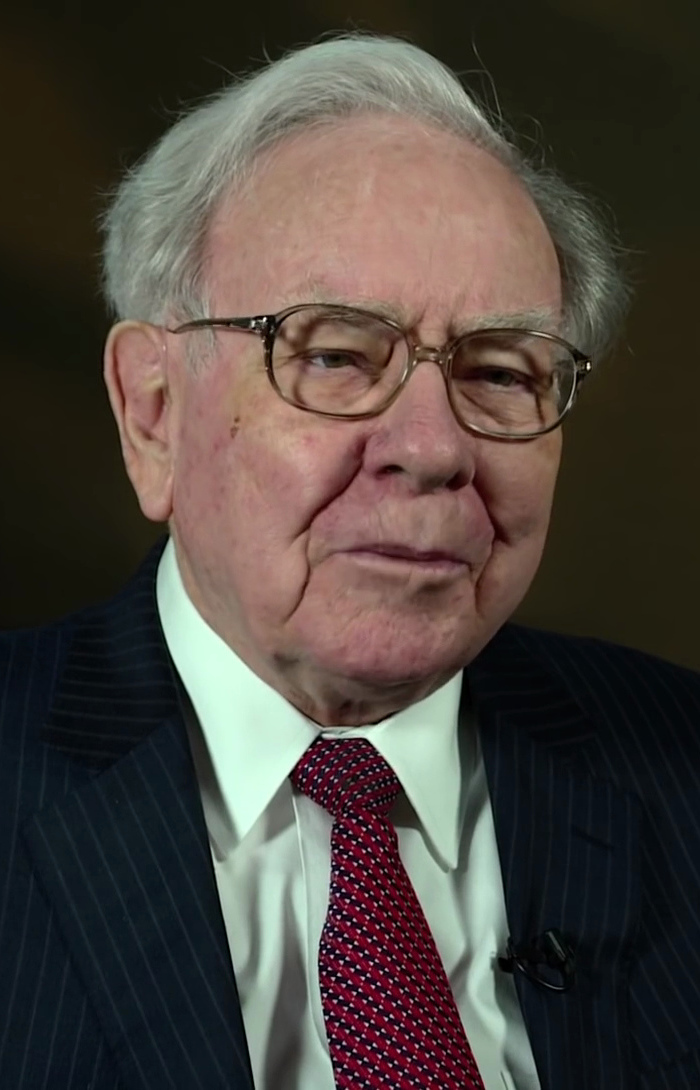
For more than half a century, Warren Buffett turned an old textile manufacturer into an unusually varied business empire. Berkshire Hathaway came to own insurers, a railroad, energy utilities, manufacturers and retailers, while holding significant stakes in publicly traded companies. The transformation made Buffett one of the most closely followed investors in the world and made his annual letters a classroom for generations of readers.
His story is not simply about buying shares that went up. It is also about deciding how to value businesses, learning from costly mistakes, working with partners, preparing for rare crises and choosing what to do with wealth. Buffett’s own account of Berkshire begins with an uncomfortable admission: acquiring the struggling textile operation was a mistake, even though it became the platform for everything that followed.
In 2026, the organization entered a new chapter. Greg Abel became chief executive on January 1. In September, Buffett became chairman emeritus while remaining a director, and his son Howard became chairman. The roles are distinct: Abel leads the company’s operations, while the chair leads the board. The transition raises a question that has always sat behind the Buffett legend: how much of Berkshire’s success belongs to one person, and how much can be carried forward by an institution?
1. A life rooted in Omaha
Warren Edward Buffett was born on August 30, 1930, in Omaha, Nebraska. His father, Howard Buffett, worked in finance and later served as a US representative. Warren grew up with an early exposure to markets and business, but his career should not be reduced to the familiar story of a child who somehow knew the future of investing.
Buffett’s attachment to Omaha became part of his public identity. He built his career away from the geographic center of Wall Street, earning the nickname “Oracle of Omaha.” The label suggests an ability to see what others cannot, but the record is more complicated: many of his decisions involved patient analysis, relationships, access to capital and the willingness to acknowledge errors.
His reputation for an uncomplicated lifestyle also became inseparable from his public image. As Britannica notes, he continued to live in the Omaha home he bought in 1958. That detail reveals something about his personal choices, not a formula that can explain Berkshire’s performance. A modest house does not by itself create investment skill.
Omaha mattered in another way: Berkshire’s shareholder gatherings turned the city into a destination for people who wanted to hear how Buffett and his longtime partner Charlie Munger thought about companies. Over time, the meeting became both a corporate event and a public expression of a distinctive business culture.
2. Learning to think about price and value
Buffett graduated from the University of Nebraska in 1950 and earned a master’s degree at Columbia University in 1951. There he studied with Benjamin Graham, a central figure in the development of value investing. Graham’s teaching encouraged investors to examine what a business was worth rather than treating a stock ticker as a prediction machine.
The distinction between price and value sounds simple, but it changes the question an investor asks. The market price is observable at a given moment. The value of the underlying business must be estimated, using information about assets, earnings, competitive position and future possibilities. That estimate is uncertain, and reasonable analysts can disagree.
Graham’s emphasis on a margin of safety offered a way to think about that uncertainty. Paying less than a carefully estimated value could provide some protection if the analysis proved imperfect. It did not guarantee a profit: a business might deteriorate, assets might be worth less than expected or a shareholder might lack the power to unlock value.
Buffett later developed an approach that placed greater weight on business quality and durability than a mechanical search for low prices alone. Graham remained an important foundation, not a complete explanation of every decision Buffett made over the following decades.
3. The partnership years
After working in finance and spending time at Graham’s investment firm, Buffett returned to Omaha and formed an investment partnership in 1956. It was a vehicle for managing partners’ capital, distinct from Berkshire Hathaway, which already existed as a textile company.
The partnership years gave Buffett a setting in which to develop his analytical style and communicate with investors. He evaluated securities and business situations rather than trying to predict the exact direction of the market each day. The scale of capital was far smaller than the sums Berkshire would eventually manage, allowing opportunities that would later be too small to matter.
Small-company investing can have advantages and risks. An overlooked security may receive less attention from large institutions, but it may also be difficult to trade or harder to research. Attractive-looking accounting numbers are not a substitute for understanding the business behind them.
Buffett wound down his partnership at the end of the 1960s. By then, Berkshire had become an increasingly important vehicle. The partnership’s performance helped establish his reputation, but it is important to distinguish its results, structure and investors from Berkshire’s later public-company record.
4. A textile purchase Buffett came to regret
Buffett’s partnership began buying Berkshire shares in the early 1960s and took control in 1965. Berkshire was then a textile manufacturer, not the diversified group it would become. Buffett did not found the company and did not initially acquire a ready-made insurance and railroad conglomerate.
In Berkshire’s 2024 annual report, Buffett revisited the decision and described taking control of the textile business as his mistake. A low purchase price did not overcome the weak economics and long-term competitive pressures facing the operation.
The case illustrates the difference between a bargain security and a good business. A company can look cheap relative to its assets, yet still require repeated investment without generating attractive returns. If the underlying operation consumes capital or loses ground to competitors, an investor’s initial discount may not be enough.
Berkshire’s later prosperity does not prove that the textile acquisition was the best available starting point. Buffett’s own retrospective argues the opposite. The company eventually moved beyond textiles, but that move took time and did not erase the opportunity cost of capital tied to a difficult industry.
5. Charlie Munger and a different kind of bargain
Charlie Munger, Buffett’s longtime business partner and Berkshire vice chairman, helped shape the evolution of Buffett’s thinking. The two shared a preference for rational analysis and long time horizons, but Munger pushed Buffett to look beyond a narrow search for statistically cheap assets.
A low price for a weak business can create a temporary opportunity. A strong business purchased at a sensible price may be able to reinvest earnings and compound value for much longer. The shift requires attention to a company’s products, customer relationships, managers and competitive position, not just its balance sheet.
Quality, however, has a price. Even an excellent enterprise can be a disappointing investment if purchased at an excessive valuation. The aim is not to ignore price; it is to assess price in relation to durable economic characteristics and the uncertainty around them.
Munger died in 2023, leaving Buffett and Berkshire shareholders to consider the significance of a partnership that had lasted decades. Buffett’s reflections on Munger are valuable primary testimony, but Berkshire’s development also depended on operating managers, employees, directors, insurers and many other contributors.
6. See’s Candies and the power of a brand
Berkshire’s acquisition of See’s Candies in 1972 became an important example in Buffett’s account of business quality. The company sold a recognizable product with customer loyalty, and its economics differed from a struggling commodity textile operation.
A business with a valued brand may be able to adjust prices without losing all its customers. That ability is sometimes called pricing power. It is not unlimited: consumers can change preferences, competitors can improve and excessive increases can damage trust.
See’s also illustrates why accounting assets alone do not describe an enterprise. Relationships, reputation and habits built over many years can contribute to earnings even when they are not fully represented by a simple inventory of physical property.
For Buffett, the lesson was not that every popular brand should be purchased at any price. It was that a company’s capacity to earn and reinvest cash over time can matter more than the apparent cheapness of its tangible assets. Applying that insight requires careful analysis rather than assuming that a familiar name is automatically a durable advantage.
7. Building a company out of many companies
Berkshire gradually became a holding company with a mix of wholly owned operations and investments in other listed businesses. Its subsidiaries operate in different industries, and the economic forces affecting an insurer are not the same as those affecting a railway or a retailer.
Owning an entire company gives Berkshire control over its operations and capital allocation within the group. Owning a minority stake in a listed company gives it an economic interest but not the same direct control. Both can contribute to shareholder value, but their accounting and governance are different.
The group’s structure made capital allocation a central task. Cash generated in one part of Berkshire could potentially be used elsewhere: to buy a business, purchase securities, support operations, repurchase shares when appropriate or remain available for future needs.
This flexibility was paired with a relatively decentralized operating model. Berkshire’s headquarters did not need to make every local business decision. That approach can allow capable managers room to work, but it also depends on choosing managers carefully and maintaining effective oversight across varied activities.
8. Insurance and the meaning of float
Insurance became one of Berkshire’s defining businesses. Insurers collect premiums before all claims are paid. The money held in the interval is often called float. It can be invested, but it is not simply a gift to the insurer: claims and expenses still have to be paid.
The cost of that float depends on underwriting results. If premiums are insufficient to cover claims and expenses, the insurer can experience an underwriting loss even if investments produce income. If underwriting is profitable, the economic result is different, although future claims remain uncertain.
For long-tailed insurance lines, years may pass between collecting a premium and settling a claim. This can create investable funds for an extended period, but it also exposes the insurer to estimation errors, inflation and unexpected events. Reserves are estimates, not perfectly known future payments.
Berkshire’s large capital base and insurance operations gave it opportunities that many individual investors cannot replicate. The lesson is not that borrowing or holding other people’s money is automatically safe. Insurance works only when obligations, underwriting discipline, liquidity and investment risks are managed together.
9. GEICO and understanding an operating model
GEICO became a major part of Berkshire’s insurance operations. Buffett’s interest in the insurer dated back to his early career, and Berkshire ultimately acquired the shares it did not already own in the 1990s. The relationship was built over time, not through a single moment of inspiration.
In evaluating an insurer, the price of its shares is only one part of the analysis. Investors must consider how it attracts customers, sets premiums, controls expenses and pays claims. A low-cost distribution model may be useful, but it does not eliminate the need to price risk accurately.
Competition, repair costs, accident trends and technology can all change the economics of motor insurance. An established company can lose ground if its pricing or operations fail to adapt. A recognizable brand is not a permanent guarantee against poor results.
For Berkshire, GEICO also demonstrates the difference between owning an insurer and buying shares in an unrelated consumer company. The insurer is an operating business with customers and obligations, as well as a source of funds available to invest within regulatory and financial constraints.
10. Coca-Cola and the case for patience
Berkshire built a major stake in Coca-Cola beginning in the late 1980s. The investment became one of the most visible examples of Buffett’s willingness to hold a well-known business for a long period, through changing market conditions and shifts in public sentiment.
A long holding period can reduce the need to find a replacement investment repeatedly. It can also allow a shareholder to participate in dividends and changes in the company’s value over time. But holding is not automatically wise if the original reasons for ownership no longer apply.
Coca-Cola’s distribution network and brand recognition made it a useful case for examining competitive advantages. Those strengths coexist with risks, including changing consumer preferences, competition, regulation and currency movements for a global business.
Investors who encounter a historical success story should distinguish the company’s past performance from the price at which they might buy today. A good decision made decades ago does not demonstrate that the same stock is suitable at any later valuation or for every investor.
11. Buying a railroad
In 2009, Berkshire announced an agreement to acquire the shares of Burlington Northern Santa Fe it did not already own. The deal, completed in 2010, brought a major US railroad into the group. Unlike a minority stock holding, a wholly owned railroad requires continuing operational investment and management.
Railroads connect producers, ports and customers through networks that are expensive and difficult to duplicate. That infrastructure can provide a durable position, but it also requires substantial spending on tracks, equipment, safety and maintenance.
The economics of freight depend on the goods transported, industrial activity, competition from other transport modes and regulation. A large network is not immune to disruptions or changes in customer demand. Financial results alone do not describe the safety and service obligations of a railroad.
For Berkshire, BNSF represented a long-term commitment to a physical business and to the capital needed to operate it. The acquisition also illustrated the group’s ability to deploy sums far larger than Buffett’s original partnership could have invested.
12. The Apple investment and a changing portfolio
Berkshire’s significant investment in Apple challenged a simplistic description of Buffett as someone who never invested in technology. Apple combines hardware, services, a widely recognized brand and an ecosystem of products. Evaluating it requires considering both consumer behavior and technology-related risks.
The size of a listed holding can change as shares are purchased or sold and as market prices move. A portfolio snapshot is therefore a description of a particular date, not a permanent statement of conviction. Berkshire’s disclosures should be read with their reporting period in mind.
A concentrated stake can contribute strongly to returns when a business performs well, but it can also increase exposure to one company. Even a diversified conglomerate can face concentration within its stock portfolio. The relationship between the portfolio and the group’s operating businesses matters when assessing overall risk.
Buffett’s willingness to hold Apple does not mean every technology company possesses the same economics. Nor does it establish that Berkshire’s cost basis or timing is available to a new investor. An established success story remains subject to future competition and valuation risk.
13. Intrinsic value is an estimate, not a quotation
Buffett’s language often distinguishes a company’s market price from its intrinsic value: an estimate of the economic benefits that can be taken from a business over time, adjusted for the time value of money and uncertainty. Market prices are visible every trading day; intrinsic value is not.
Estimating it requires assumptions about cash generation, reinvestment, growth, risks and the rate used to translate future amounts into present value. Small changes in those assumptions can produce large changes in the result. A precise-looking spreadsheet does not make an uncertain future precise.
One useful question is how much a business can distribute to owners without undermining the investment needed to maintain its competitive position. Accounting earnings are a starting point, but depreciation, working capital and capital expenditure may matter in different ways for different businesses.
There is no single number that every thoughtful observer must accept. An investor can be correct about a company’s quality and still overestimate its value. Buffett’s own admission about Precision Castparts shows that even a highly experienced buyer can misjudge the future earnings supporting an acquisition price.
14. What a competitive “moat” can and cannot do
Buffett popularized the image of an economic moat: characteristics that help a business defend its returns against competition. A strong distribution network, customer loyalty, cost advantages, switching costs or valuable intellectual property can contribute to such a position.
The metaphor is useful because profitable markets attract competitors. A company with impressive current earnings may struggle to sustain them if rivals can offer the same product at a lower price. An analysis of durability asks why customers and profits might remain over time.
But the moat is not a permanent physical wall. Technology changes, regulation evolves and customer preferences shift. Advantages can weaken gradually or disappear quickly. A brand that once appeared indispensable can lose relevance if the market moves in another direction.
Identifying a possible moat also does not determine the correct share price. Investors must consider how much growth is already reflected in the price and what happens if the business performs less well than expected. A sound concept becomes dangerous when it is treated as a guarantee.
15. Compounding, time and the cost of mistakes
Compounding describes the process by which returns themselves can contribute to future returns. If an investment grows and gains remain invested, later growth occurs on a larger base. Over long periods, the difference between two annual rates can become substantial.
For illustration, $1,000 growing at a hypothetical 5% a year for 20 years becomes about $2,653 before fees, taxes and inflation. At 7%, it becomes about $3,870 under the same simplified assumptions. Neither path reflects guaranteed market returns, which fluctuate and can be negative.
Losses interrupt compounding. A 50% fall requires a 100% gain to recover the original value, before considering time, fees or inflation. Avoiding excessive risk can therefore matter even when the most dramatic gains attract more attention.
Buffett benefited from a very long career, but longevity alone is not a reproducible investment strategy. The rate of return, amounts invested, timing, taxes and the ability to remain invested all matter. Investors also need to retain enough accessible money for their own circumstances.
16. Cash, patience and missed opportunities
Berkshire has at times held substantial cash and short-term investments while waiting for opportunities. Buffett treated liquidity as a source of flexibility and protection, especially for a group with large insurance obligations. Holding cash can also create a cost when attractive long-term investments are available elsewhere.
The appropriate balance depends on the owner. An insurer facing potential claims cannot evaluate cash in the same way as an individual saving for retirement. A household may need an emergency reserve even when long-term investments offer a higher expected return.
Patience is often described as doing nothing, but it can involve extensive preparation: understanding businesses, maintaining liquidity and deciding in advance what risks are acceptable. Waiting does not guarantee that a better price will appear, and the decision not to buy can turn out to be wrong.
Buffett has acknowledged errors of omission as well as mistakes in purchases. A missed investment can be hard to quantify because the alternative path is hypothetical. Still, the discipline of examining decisions that were not made helps counter the temptation to judge a record only by visible winners.
17. Berkshire in the financial crisis
During the 2007–08 financial crisis, Berkshire had capital available while many institutions were under pressure. In September 2008 it invested $5 billion in Goldman Sachs, and the following month it purchased $3 billion in General Electric preferred stock, according to Britannica.
These transactions were negotiated on terms specific to the moment and to Berkshire’s resources. Preferred shares and associated rights are not necessarily equivalent to common shares available to ordinary investors. A headline about Buffett investing in a company does not reveal the complete economic terms.
The deals illustrated the value of liquidity and credibility during uncertainty, but they were not risk-free. Financial firms and industrial companies faced substantial challenges, and Berkshire itself was exposed to the wider downturn through its businesses and investments.
It would be misleading to conclude that every crisis purchase will succeed or that cash alone guarantees the ability to act. A buyer also needs an assessment of the counterparty, the terms of the transaction and the possibility that events worsen. Berkshire’s scale gave it negotiating opportunities unavailable to most households.
18. Mistakes: Dexter Shoe and Precision Castparts
Buffett has repeatedly discussed investments that failed to meet his expectations. Berkshire bought Dexter Shoe in 1993, paying with Berkshire shares. In his 2014 letter, he described underestimating competitive pressures and emphasized the additional cost of using shares whose value later rose.
The Dexter example contains two decisions: what business to buy and what to use as payment. A buyer can lose from an acquisition that deteriorates and also give up valuable future ownership when it issues stock. The retrospective value of those shares, however, depends on the date at which it is measured.
In his 2020 shareholder letter, Buffett also took responsibility for paying too much for Precision Castparts, acquired in 2016. Berkshire recorded a large impairment in 2020. A write-down is an accounting adjustment reflecting changed estimates; it does not mean a business has ceased to operate or that every dollar of cash was lost in that year.
These examples complicate the notion of an infallible investor. They show that understanding a company’s past success is not enough to predict its future economics and that even disciplined buyers can be overconfident about how much a business is worth.
19. Governance under pressure: Salomon
In 1991, Buffett became interim chairman of Salomon during a crisis involving improper US Treasury auction bidding and the firm’s handling of the misconduct. Berkshire had an investment in Salomon, and Buffett’s temporary role placed him directly in a difficult governance situation.
The episode is often told as a story about a famous investor rescuing a firm. It also raises broader questions: how quickly do leaders respond to problems, who is accountable, and what systems prevent misconduct from being ignored or concealed?
A strong reputation cannot substitute for controls. A firm can employ talented people and still experience serious failures. When misconduct occurs, the response from senior management and regulators can have consequences beyond the original transaction.
The distinction between an investor’s image and the practices of a company in which that investor holds a stake remains important. Buffett’s own later reflections on Salomon provide one perspective, but a full account also requires attention to independent reporting, regulatory records and the people affected.
21. Berkshire versus the market
Berkshire’s long-run market performance under Buffett attracted attention because its shares substantially outperformed the broad US market over the full historical period reported by the company. That record is extraordinary, but the result depends on the exact starting and ending dates and the measures chosen.
For example, Berkshire’s 2025 annual report compares the change in Berkshire’s per-share market value with the S&P 500 including dividends. It reports compounded annual gains of 19.7% and 10.5% respectively for 1965–2025. The difference between a share-price series and an index including dividends is explicit in the table; no index perfectly mirrors Berkshire’s unusual collection of businesses. In 2025 alone, the table reports 10.9% for Berkshire and 17.9% for the index, illustrating that the long-term ranking did not hold every year.
A published annualized return summarizes a sequence of different yearly outcomes. It is not the return earned by a person who bought at a later date, sold earlier, paid transaction costs or held shares in an account subject to different taxes. Even a very high long-term figure can include years of sharp decline and extended stretches when another investment did better.
One further distinction matters: an increase in Berkshire’s share price is not the same as a precise increase in the value of every subsidiary. Markets reassess what investors are willing to pay for a claim on the whole company. That price can move for reasons beyond a change in the current year’s operating profits.
A comparison of Berkshire’s share-price performance with an index total return must account for dividends and the way the index is calculated. Berkshire generally retained earnings rather than distributing regular dividends, while an index total-return series typically assumes dividends are reinvested. Taxes, fees and an individual investor’s trading history can produce different realized outcomes.
A long-run average does not mean Berkshire outperformed every year, every decade or every alternative. Its size, portfolio and opportunities changed dramatically. As more capital must be invested, a small successful purchase can have less effect on the entire company than it once would have had.
The record also contains survivorship and hindsight risks when used as a model for other investors. We can observe the company that succeeded; it is harder to reconstruct all the companies and decisions that looked promising at earlier dates but did not produce the same result.
22. Buffett and John Bogle: different paths
Buffett and Vanguard founder John Bogle are often discussed together because both emphasized the importance of costs and long-term ownership. Their main achievements, however, were different. Buffett built and allocated capital within a conglomerate; Bogle helped make low-cost index investing accessible to individual investors.
An index fund seeks to track a specified benchmark. Berkshire is a single listed company with operating subsidiaries and investments selected by its management. Owning Berkshire shares is not the same as owning a diversified fund tracking the entire stock market.
Buffett has praised low-cost index funds for many investors, while his own career involved active decisions, negotiated deals and control of businesses. That combination is not necessarily contradictory: a strategy may be sensible for a broad group of savers even if a particular professional has followed another path.
Neither approach removes risk. An index fund can fall with its market, and Berkshire shares can fall with changes in its businesses, investments or valuation. Costs, diversification, time horizon and individual circumstances all matter. Past returns do not establish future returns.
23. The annual meeting and a distinctive culture
Berkshire’s annual meeting grew into an event that brought shareholders to Omaha to hear management answer questions and discuss the company. For many attendees, it became a chance to learn about businesses they partly owned as well as a gathering of a community of investors.
The event helped reinforce a culture of long-term ownership and unusually direct communication. Buffett and Munger’s exchanges also contributed to their public image: serious analysis was often presented with humor and memorable examples.
That culture has value only if it is supported by operating practices. Decentralization requires trust in managers, but trust should coexist with reporting, controls and board oversight. A compelling annual meeting cannot by itself verify the quality of every subsidiary’s decisions.
The next generation of Berkshire leadership faces the challenge of preserving useful principles without treating every past habit as untouchable. A large organization must adapt to new markets, risks and technologies even when its core commitments remain stable.
24. Giving away a fortune
In 2006, Buffett announced a major philanthropic commitment involving Berkshire shares and several foundations. The Gates Foundation became the largest beneficiary over many years, while family-linked foundations also received gifts. The form of the donations matters: shares are transferred to organizations that then direct resources to charitable work.
In 2010, Buffett joined Bill and Melinda French Gates in launching the Giving Pledge, an invitation for wealthy people to commit much of their wealth to philanthropy. A pledge is a public commitment, not a substitute for examining how funds are distributed or what outcomes they achieve.
In 2026 Buffett redirected his announced gifts to four family foundations. On November 16, Berkshire said he would convert 6,150 Class A shares into 9,225,000 Class B shares and donate them among those foundations. The company announcement described this as consistent with his stated plan for his remaining Berkshire shares.
The impact of philanthropy is not determined solely by the value of a gift on the day it is made. Governance, timing, beneficiaries, transparency and evaluation all matter. Large private donations can support important work while also raising legitimate questions about accountability and the influence of wealthy donors over public priorities.
25. Succession: CEO, chair and director
Berkshire announced in May 2025 that Greg Abel would become president and CEO effective January 1, 2026. Abel had overseen non-insurance operations and assumed executive leadership after Buffett’s long tenure. An executive succession changes who is responsible for running the company; it does not erase the existing board or management teams.
On September 18, 2026, Berkshire announced that Buffett had become chairman emeritus and would remain a director. The board elected Howard Buffett as chairman. The announcement distinguishes the board transition from Abel’s earlier appointment as chief executive.
A chief executive and a chair have different responsibilities, even though the same person can sometimes hold both jobs. At Berkshire after the September transition, Abel leads as CEO; Howard Buffett chairs the board; Warren Buffett remains on the board as chairman emeritus and director.
Succession is not a single date. It involves transferring relationships, institutional knowledge and capital-allocation responsibilities while allowing the new leader to make decisions in a different environment. The company’s future will be judged by actions over time, not merely by the identity of its leaders.
26. The limits of the Buffett playbook
Buffett’s record offers useful ideas, but it cannot be copied by following a list of his holdings. Berkshire has access to whole-company acquisitions, insurance float, experienced managers and negotiated transactions. Individual investors face different resources, tax situations and needs.
Public disclosures also arrive after investment decisions. A holding reported at the end of a quarter does not reveal every conversation behind it or guarantee that the position remains unchanged when a reader sees the report. Buying simply because a famous investor owned a stock can mean entering at a different price and with a different objective.
Concentration can amplify gains and losses. Diversification can reduce exposure to an individual company but cannot eliminate market risk. A long horizon may make short-term fluctuations easier to tolerate, yet it does not remove the possibility of permanent loss or guarantee that money will be available when needed.
Anyone considering an investment should assess suitability, costs, tax consequences, liquidity and the possibility of loss. For many people, independent regulated financial advice may be useful. This profile is educational and is not a recommendation to buy Berkshire or any other security.
27. A legacy beyond the legend
Buffett’s influence reaches well beyond the businesses Berkshire owns. He helped popularize a way of discussing investment that starts with business economics, insists on the importance of price and asks whether an owner can understand the risks being taken.
His career also shows the limits of neat rules. A cheap textile company became an expensive mistake; a beloved acquisition such as Dexter failed; a very large organization required a succession plan; and philanthropy introduced questions that cannot be answered by investment returns alone.
There is room to admire the achievement without turning it into mythology. Berkshire’s results reflected decisions made over decades, favorable and difficult market periods, the contributions of many people and a structure that evolved. They do not prove that any investor can reproduce the same outcome by adopting a few memorable phrases.
As of November 2026, Buffett remains a Berkshire director while the company is led by a new CEO and chair. The enduring test of his legacy is not whether the next chapter looks exactly like the last, but whether Berkshire can continue to allocate capital responsibly, manage its obligations and communicate clearly without depending on one person’s daily leadership.
Sources and further reading: Encyclopaedia Britannica, Warren Buffett biography; Berkshire Hathaway, 2024 annual report; Berkshire Hathaway, 2025 annual report; Berkshire Hathaway, 2020 shareholder letter; Berkshire Hathaway, shareholder letter archive; Berkshire Hathaway, May 2025 CEO succession announcement; Berkshire Hathaway, September 2026 board transition; Berkshire Hathaway, November 2026 charitable gifts; The Giving Pledge, Buffett’s pledge. Information checked November 28, 2026.
Cover image: Warren Buffett at the 2015 SelectUSA Investment Summit, US International Trade Administration, via Wikimedia Commons. US federal government work identified as public domain; cropped by Wikimedia contributors.