
Steve Jobs helped change how computers, music players and mobile phones fitted into ordinary life. He did not accomplish that by inventing every component inside them. His distinctive contribution was to insist that engineering, software, industrial design, distribution and presentation should be considered together. A device was not finished merely because it worked: people had to understand it, want it and be able to use it.
That approach produced some of the most influential consumer products of his lifetime. It also created tensions over control, credit, working methods and the freedom of customers and developers. Jobs could recognise an opportunity that others underestimated, but conviction did not make every decision correct. His career included commercial failures, a painful departure from Apple and a return that depended on work undertaken while he was away.
This portrait follows those different strands: the early partnership with Steve Wozniak, the Macintosh, NeXT and Pixar, Apple's recovery, and the transition from personal computers to mobile platforms. It treats Jobs as a consequential organiser and product leader, not as a solitary inventor or a universal model for how people should behave.
Growing up near the electronics industry
Steven Paul Jobs was born on February 24, 1955, in San Francisco and raised by adoptive parents in the California communities that became associated with Silicon Valley. His upbringing placed him near a developing electronics industry, but geographical proximity alone does not explain his later career. Many people encountered the same environment without forming the same ambitions or partnerships.
Electronics offered a practical way to investigate how things worked. At the same time, Jobs developed interests extending beyond conventional engineering. His later public identity combined technical enthusiasm with an attraction to visual culture, unconventional education and spiritual exploration. Those interests did not add up to a business plan in childhood. They became relevant through experiences and relationships that accumulated over time.
The region itself matters to the story. Businesses, engineers, universities and hobbyist communities made it possible to obtain components, exchange ideas and imagine starting a company. Apple did not emerge from a place without infrastructure. Its founders could draw on a wider setting in which experimental computing was becoming accessible outside large institutions.
Jobs's eventual success should therefore not be used to suggest that anyone can reproduce it through personality alone. His ability to recognise possibilities operated within an unusual combination of place, timing, knowledge and personal connections. The history begins with a young person exploring that environment, not with an inevitable future chief executive.
Reed College, calligraphy and the uses of curiosity
Jobs began attending Reed College in Oregon in 1972 but did not complete a degree. In his later account, he left the required programme after six months while continuing to attend classes that interested him. One of those interests was calligraphy: lettering, spacing and the visual relationships that make typography readable and expressive.
At Stanford's commencement, Jobs linked that experience to his concern for typography on the Macintosh. The university's published transcript is evidence of how he understood and presented his own history. It is not proof that a single course independently caused the development of graphical computing, which involved many contributors and earlier systems.
The useful insight is narrower and more interesting. An experience without an obvious immediate commercial application can influence later judgement. Someone who has studied lettering may notice details that a team focused only on processing speed overlooks. Jobs brought an interest in how information felt and appeared to products that might otherwise have been evaluated primarily as machines.
There is also a limit to turning the episode into motivational advice. His decision to leave college involved uncertainty, financial pressure and support from others. Successful people can organise earlier events into a persuasive story after the outcome is known. Readers can appreciate the value of curiosity without treating dropping out as a reliable route to achievement.
Atari, travel and the partnership with Wozniak
In 1974, Jobs worked at Atari and travelled to India. Those experiences belonged to a period in which he was exploring both employment and ideas about how to live. They should not be read as secret preparation for products that would appear decades later. The practical connection to Apple's beginnings was his relationship with Steve Wozniak.
According to the Computer History Museum's Apple timeline, mutual friend Bill Fernandez had introduced the two. Wozniak's expertise in designing electronic circuits complemented Jobs's interest in making something that could be presented and sold. Their partnership joined different strengths rather than duplicating the same role.
Wozniak participated in the Homebrew Computer Club, whose meetings brought together enthusiasts experimenting with small computers. The club illustrates an important part of the early personal computing movement: ideas circulated among people who wanted to understand machines and build their own. Commercial possibilities developed alongside a culture of sharing and technical experimentation.
Jobs saw that Wozniak's work could become the basis of a business. That was a consequential judgement, but it did not make him the designer of Wozniak's circuitry. Understanding their different contributions is essential to a fair account of Apple. An invention needs technical substance; a company also needs customers, resources and a credible way to deliver what it promises.
Apple I: turning a circuit board into a business
Apple Computer Company began as a partnership on April 1, 1976, involving Jobs, Wozniak and Ronald Wayne. Wayne soon withdrew. The product at the centre of the venture was the Apple I, designed by Wozniak. It was an assembled circuit board rather than a complete modern computer with every accessory included.
The distinction matters because the founders were initially selling into a world of enthusiasts and emerging computer retailers. A buyer still needed other equipment to use the board. Apple had not yet reached the integrated consumer experience later associated with its name, but it was moving beyond distributing an idea or a set of instructions.
Paul Terrell's Byte Shop ordered assembled boards, helping give the young venture a concrete commercial objective. Producing a working item for a retailer required obtaining parts, organising assembly and meeting expectations. Jobs's role in establishing that relationship demonstrates the difference between appreciating a design and creating a transaction around it.
The family garage became an enduring symbol of Apple's beginnings. Symbols can be useful, but they compress history. The company also depended on Wozniak's earlier work, suppliers, buyers and a developing market. The important story is not that a particular building generated innovation. It is that a technical project became a product through a sequence of practical decisions and outside commitments.
Apple II and a wider audience for personal computing
The Apple II appeared in 1977 and helped establish Apple as a serious participant in personal computing. It combined Wozniak's engineering with a more complete presentation: a case, keyboard and colour graphics. Expansion slots gave users and developers ways to extend the machine rather than treating its original configuration as the only possible use.
For customers outside the most committed hobbyist circles, presentation mattered. A computer could remain technically interesting while looking difficult to approach. Packaging the technology as a recognisable product helped people imagine it in a home, classroom or workplace. Jobs's emphasis on the object as a whole would become a recurring feature of his career.
The Apple II also makes a useful counterpoint to the later reputation of Apple as a tightly controlled platform. Its capacity for expansion supported an ecosystem of software and additional hardware. Different Apple products embodied different balances between openness, integration and control; there was no single unchanging formula from the company's first years onward.
Nor did one successful machine settle the future of the industry. Competitors, software makers and users continued to shape what a personal computer was for. Apple's growth depended on participation beyond its own employees. The lesson is not simply that attractive packaging sells technology, but that engineering and a usable product must connect with a wider community of applications and needs.
From a young venture to a public corporation
Apple incorporated in January 1977 after investor Mike Markkula became involved. The Computer History Museum records his role in financing and business planning. His participation helped the venture move from a founders' project towards an organisation with the structures needed to expand production and distribution.
Apple went public in December 1980. That date is separate from the partnership's formation and the later incorporation. It marked a change in scale and accountability: the company now had public shareholders as well as customers, employees and private backers. The founders' financial success became part of a broader corporate story.
Growth brought problems that a compelling product idea alone could not solve. Manufacturing, hiring, sales channels and financial management required different forms of competence. A founder's intuition could help set direction, but it did not replace the work of organising a business that thousands of people would depend on.
This transition helps explain later conflict. The interests of a product team, a founder, a chief executive and a board may overlap without being identical. Jobs wanted Apple to make exceptional products, but disagreements could arise over costs, schedules and which machines deserved investment. Such disputes were not merely personal drama. They concerned how an expanding company should allocate limited resources while meeting commitments to people outside its original partnership.
Xerox PARC, Lisa and the origins of graphical computing
Jobs and Apple colleagues visited Xerox's Palo Alto Research Center in 1979 and saw demonstrations of graphical computing. Windows, on-screen objects and a pointing device offered a different relationship between a person and a computer from entering commands alone. Apple did not originate every element it encountered there.
It is equally misleading to reduce the subsequent history to simple copying. A research demonstration and a mass-produced consumer system solve different problems. Apple's teams adapted and developed ideas while dealing with hardware limits, software design and the need to make interaction understandable to new users. Earlier research and later implementation both deserve recognition.
The Lisa, introduced in 1983, brought a graphical interface to an ambitious Apple product, but its high price restricted its market. The Macintosh pursued a more accessible price point, although that choice involved compromises of its own. Both projects reveal that an interface can be promising without a particular product becoming commercially successful.
The significance of graphical computing lies in how it reorganised interaction. People could recognise objects, select actions and receive visual feedback, rather than memorising every command in advance. That did not eliminate learning or complexity. It shifted where complexity appeared and made different kinds of tasks more approachable. Jobs recognised the commercial and cultural potential of that shift, while teams of engineers and designers turned it into working systems.
The Macintosh: an influential launch with real limitations
Jobs introduced the Macintosh on January 24, 1984. Its compact design, graphical interface and mouse were supported by a carefully staged public presentation. The famous advertising campaign positioned the machine as an alternative to conformity, connecting a technical product with an argument about creativity and individual expression.
The launch helped establish a model for technology marketing: explain the product through an experience rather than a list of components. A demonstration could show what a person might do, while the presenter supplied a larger story about why it mattered. Jobs became especially associated with this combination of practical display and theatrical confidence.
But the first Macintosh was constrained by memory, price and a limited initial range of applications. Britannica's account of Jobs's career describes disappointing early sales and the tensions that followed. Influence and immediate commercial performance are different measures; a product can have lasting importance without meeting every expectation at launch.
The Mac also depended on people beyond its most visible spokesman. Software, hardware and interface design required sustained specialist work. Jobs's insistence on the experience of the machine helped give those efforts a common direction, but presenting him as the sole creator erases the activities that made the demonstration possible.
The product's later development matters as much as its first appearance. Apple and outside developers improved what users could do with it. The history of the Macintosh is therefore a story of refinement and an expanding ecosystem, not a single moment in which a finished future arrived on stage.
The conflict that took Jobs out of Apple
Apple had recruited John Sculley as chief executive. The arrangement initially brought together Jobs's product ambitions and an executive experienced in running a large business. Over time, their priorities diverged, and the Macintosh's commercial difficulties intensified disagreement about control and direction.
In 1985, Jobs lost operational authority and subsequently resigned from Apple. He later described the experience as being fired, but the institutional sequence included removal from his management role followed by departure. Preserving that distinction avoids turning a complicated boardroom struggle into a misleadingly simple personnel event.
For Jobs, the break separated his identity from a company he had helped create. For Apple, it did not mean development stopped. Engineers and executives continued improving the Macintosh and introducing products during the years he was absent. Any portrait that treats those years as an empty interval misrepresents the company's history.
The episode also raises a question that applies beyond Apple: how should an organisation manage a founder whose influence is both valuable and disruptive? There is no automatic answer in the title “founder.” A board has responsibilities to the business as a whole, while removing a powerful product leader can carry substantial risks. Jobs's later return does not make every earlier disagreement imaginary. It shows that professional relationships and the needs of a company can change over time.
NeXT: a commercial disappointment with a durable technical legacy
After leaving Apple in 1985, Jobs established NeXT, aiming to build advanced computers for education and professional use. The machines attracted attention for their design and software environment, but their expense limited demand. The venture did not become a mass-market hardware success comparable to the Apple II or later iMac.
That outcome is important to the portrait. A demanding vision, financial backing and an experienced founder did not guarantee that customers would adopt a product. Institutions had budgets, existing systems and alternatives. NeXT's ambitions had to confront those practical constraints, regardless of how strongly Jobs believed in the work.
The company eventually concentrated on software. Its operating system and development environment became far more consequential than the number of its workstations sold. When Apple later acquired NeXT, that software helped provide the technical foundation for a new generation of Mac operating systems.
NeXT also connects Jobs's career to the birth of the Web. Tim Berners-Lee developed the first Web browser and server on a NeXT computer at CERN, as CERN's historical account explains. The machine's role does not make Jobs an inventor of the Web; it demonstrates how one organisation's tools can enable an innovation developed elsewhere.
Commercial failure and historical significance can therefore coexist. The company missed much of its original market ambition while creating technology with a long afterlife. Readers interested in that separate invention can explore our portrait of Tim Berners-Lee.
Pixar: backing a company without claiming its films
In 1986, Jobs acquired the computer graphics business that became Pixar from Lucasfilm. It had a technological history and experienced people before his involvement. Saying that he simply invented Pixar would obscure the research and creative work on which the company was built.
His role was as an owner, financier and business leader. Pixar's transformation into an animation studio depended on specialists in computing, production and storytelling, including Ed Catmull and John Lasseter. Jobs did not direct Toy Story, and his contribution should not be confused with the authorship of its characters or scenes.
Toy Story, released in 1995, demonstrated the potential of a full-length computer-animated feature. Technical capability alone would not have been sufficient: audiences needed a story worth watching. Pixar is a particularly clear example of the connection between engineering infrastructure and creative work, without either side being reducible to the other.
Disney announced its agreement to acquire Pixar in 2006 in a transaction valued at approximately $7.4 billion. Its announcement identifies the distinct leadership roles of Catmull, Lasseter and Jobs, who would join Disney's board.
The Pixar experience expanded Jobs's influence beyond personal computing. It also challenges a simplistic description of his management approach as identical everywhere. A company making films has different production cycles and creative needs from one building computers. His career involved supporting more than one kind of organisation, not merely applying a single product formula to every industry.
Returning to an Apple that needed a new direction
Apple announced its intention to acquire NeXT in late 1996, and Jobs returned as the deal brought the company and its technology into Apple. During 1997, he moved back into leadership. The return was not just a reunion with a charismatic founder; Apple needed an answer to technical and commercial problems.
The existing Mac operating system had limitations, and efforts to develop its successor had not produced an adequate solution. NeXT offered software that could support a different foundation. The acquisition therefore joined a leadership change with a consequential architectural decision.
Jobs simplified Apple's product strategy and ended initiatives that did not fit it. He also reached an agreement with Microsoft, including investment and continued support for important Mac software. Working with a major competitor challenged the idea that Apple's survival required Microsoft to fail.
Britannica's account of the recovery emphasises the combination of product focus, partnerships and a renewed commitment to integrated hardware and software. No single announcement explains the turnaround. Apple required customers, functioning products, operational improvement and a sustainable business.
The return remains a powerful business story because Jobs's earlier departure had looked like a definitive ending. Yet its practical lesson is not that a founder should always regain control. It is that a changed organisation can sometimes use changed experience. NeXT and Pixar had given him different problems to solve during the intervening years.
The iMac and the discipline of a recognisable product
The iMac, introduced in 1998, made Apple's renewed direction visible. Its all-in-one design and translucent enclosure distinguished it from many conventional personal computers. Rather than asking customers to infer Apple's identity from an extensive catalogue, the company offered an object with a clear place in that identity.
Industrial designer Jony Ive and his colleagues were central to that work. Apple's later account of Ive's contribution explicitly connects him with the iMac and the company's revival. Jobs's partnership with design specialists mattered more than the myth that a chief executive personally drew every successful device.
The machine also represented choices about what to remove or change, including familiar connections and storage conventions. Such choices can simplify one person's experience while inconveniencing another. A product aimed at particular needs does not become universally suitable because its design is confident or attractive.
The iMac's importance was therefore broader than its colours. It showed how a focused product could communicate an organisational strategy: fewer confusing options, a recognisable experience and a reason for consumers to reconsider a struggling brand. Its success helped demonstrate that Apple still had a viable role in personal computing.
Design worked here as a form of coordination. The enclosure, software, marketing and intended use pointed in a consistent direction. The challenge was not merely to make a computer look different, but to make that difference correspond to a product people could understand and buy.
Mac OS X and the work beneath the interface
Apple released Mac OS X in 2001, using technology developed at NeXT as part of its foundation. The new operating system was not simply a visual redesign of the existing Mac. It represented substantial work on the underlying architecture as well as the interface users encountered.
An operating system coordinates applications, memory, files and interactions with hardware. Customers may pay most attention to what appears on screen, but reliability depends on systems they rarely see. The NeXT acquisition mattered because it supplied more than a product personality or an executive: it brought software and technical expertise.
Moving users and developers to a different foundation was a transition, not an instant replacement without friction. Existing applications and workflows had to be considered. The same integration that can make a finished product feel coherent can require difficult coordination when one of its central layers changes.
This aspect of Jobs's career is sometimes overshadowed by launch presentations. A demonstration can last minutes; platform work can continue for years. Decisions about operating systems influence which applications can be built, how teams maintain compatibility and how future hardware can be supported.
Mac OS X illustrates the connection between product judgement and infrastructure. Jobs's influence was not limited to selecting visible details. He also backed changes whose value lay in making later products possible. That work belonged to teams of engineers, and its historical importance cannot be reduced to the appearance of a desktop or a single promotional event.
Retail stores and the computer as a digital centre
As Apple rebuilt its position, it developed a wider idea of the Mac's role. Personal computers could organise music, photographs and other digital activities rather than serving only as isolated tools for writing documents. Related software and devices gave customers more reasons to use the same environment.
Apple's own retail stores, which began opening in 2001, made the experience easier to demonstrate directly. A company selling through its own spaces could decide how machines were presented, explain their uses and support customers without relying entirely on the priorities of other retailers.
The business case involved risks as well as advantages. Stores require staffing, property and continuing operations. Control over presentation is not free, and a physical location does not automatically make a product attractive. Retail had to connect with products that people wanted and assistance that they found useful.
The broader strategic pattern was to consider the journey around a device. Discovery, purchase, setup and everyday use all influence whether technology feels approachable. Jobs's emphasis on the finished experience extended beyond the moment when a customer first turned on a machine.
That pattern also increased Apple's control over the relationship. Buying a product, obtaining software and receiving support could become linked activities within one company's environment. Customers gained coordination and recognisable service, while the company gained more influence over how they entered and remained within its ecosystem.
The iPod: integration rather than the invention of digital music
Apple announced the iPod on October 23, 2001. Portable digital music players already existed, so its significance was not that Jobs had invented the ability to carry audio files. The first iPod combined storage, navigation and synchronisation with a Mac in a product designed around listening to a personal collection.
Apple's original announcement described a five-gigabyte hard drive and automatic synchronisation with iTunes. Those details reveal the practical proposition beneath the advertising: moving a collection between a computer and a portable player with less manual organisation.
Storage capacity mattered, but so did finding a song once the songs were there. The wheel and menus addressed the problem of navigating a substantial library with a small device. A component specification did not explain that experience by itself; the interaction design made the capacity usable.
The initial iPod also had limits. It was expensive and initially depended on a Mac. The wider success of the product family developed through later models, software changes and a broader audience. Treating the first announcement as the complete explanation leaves out the work of expanding its market.
The iPod changed Apple's identity because it connected computing with an activity people already valued deeply. Music created an everyday relationship with the brand beyond the desktop. The product illustrated Jobs's ability to organise existing technologies around a recognisable human use rather than asking people to admire the technologies separately.
iTunes and the business of making digital music convenient
The iTunes Music Store opened in April 2003. Its launch connected Apple's player and music software with an authorised way to purchase recordings. Digital distribution was already a contested field; Apple's contribution was a particular arrangement of catalogue access, payment, download and playback.
The original store announcement offered individual songs for 99 cents in the United States and described the rights customers received. It also specified an initial Mac requirement. Those conditions are historical details, not a description of how all music services operate today.
The store's files used AAC, rather than every download being an MP3. That technical distinction is worth preserving because accounts of digital music often use “MP3” as a loose label for all compressed audio. The format, software and licensing arrangements influenced where and how a purchase could be used.
Record companies supplied the music, while Apple organised the purchasing experience and its connection to devices. Negotiation was as important as interface design. A polished store could not function without rights holders agreeing to participate, and a catalogue alone would not guarantee convenient use.
The arrangement also introduced dependence on a commercial intermediary. Convenience, permitted uses and platform restrictions existed together. Apple's importance was not that it resolved every problem in digital distribution, but that it demonstrated a market for a coordinated purchase experience at a moment when the recording industry was struggling with changes in how people obtained music.
The Intel transition and the willingness to change foundations
In 2005, Apple announced that the Mac would move from PowerPC processors to Intel processors. This was a change to an important technical foundation, affecting the relationship between hardware, operating systems and applications. The first Intel-based Macs followed the next year.
The transition complicates the idea that Jobs's leadership consisted only of protecting a fixed vision. Some commitments remained stable, including control over the user experience, while particular technologies could be replaced when they no longer supported the desired direction.
Changing processor families creates work for developers as well as the manufacturer. Software must run on the new architecture, existing users need a viable path forward and a company must manage products during the transition. A public announcement can clarify the destination, but it cannot remove those engineering and commercial tasks.
The episode also distinguishes integration from doing everything internally. Apple could combine its own software and product design with components made by other companies. Choosing a supplier did not surrender every aspect of the experience; it was part of deciding where control and cooperation were most useful.
For a biography, the transition is valuable because it shows a decision less visually dramatic than a new phone but still strategically important. Jobs's career involved abandoning some earlier choices, not merely defending them. Consistency at the level of a product goal did not always mean continuity at the level of the technology used to reach it.
The iPhone and a new arrangement of familiar activities
Jobs introduced the iPhone on January 9, 2007. The presentation combined calling, music and internet use into one product, then demonstrated how a large touchscreen could adapt to different activities. The phone went on sale later that year, so its announcement and first retail availability should not be treated as the same event.
Smartphones, mobile internet access and touchscreens existed before it. Apple's contribution was not the origin of every ingredient. It was a particular integration of interface, software and hardware that helped change expectations about how a phone should work.
Apple's launch announcement describes the original model's mobile network, Wi-Fi and browser. It did not include every capability later associated with the product family. The first iPhone lacked 3G, for example, and its software ecosystem was not yet the native App Store that developed subsequently.
The touchscreen made the interface responsive to the task rather than permanently defined by a physical keyboard. It could show a photograph, a webpage or typing controls across the same surface. That flexibility made design decisions in software especially important: gestures and feedback had to help people understand actions without a large collection of fixed buttons.
Jobs's presentation gave a coherent public explanation of that approach. It did not replace the contributions of Apple's engineering teams, component suppliers, mobile network partners or earlier research. The resulting influence came from a working product and its development over time, not from charisma alone.
The App Store and the trade-offs of platform control
Apple opened the App Store in July 2008, creating a channel for native applications on the iPhone and iPod touch. The first iPhone had not launched with that marketplace. The change expanded the device from a set of functions defined primarily by Apple into a platform serving many additional uses.
Apple's contemporary announcement described more than 500 native applications at launch, covering categories such as games, business and news. Developers supplied functionality Apple could not have created alone, while the store provided distribution, payment and updates.
The arrangement reduced some practical barriers. Customers could find software in one place, and developers could reach users without individually negotiating with every mobile carrier. The benefits of coordination were substantial, especially compared with a fragmented purchasing process.
But a central marketplace also gives its operator power. Rules about admission, payment and permitted features influence which businesses can reach customers and on what terms. A system can be convenient for users while still raising legitimate questions about competition and developer independence.
Jobs's preference for controlling the overall experience therefore became more than a matter of industrial design. It affected the organisation of a software economy. The App Store's history is not a simple choice between beneficial coordination and harmful restriction. Both possibilities emerge from the same concentration of responsibility, which is why evaluating a platform requires attention to its rules as well as its interface.
The iPad and the search for another computing experience
Apple introduced the iPad in January 2010. It combined a larger touchscreen with the application environment already developed for its mobile devices. Tablets were not a new concept, but Apple sought to make the category understandable through specific activities such as browsing, reading, watching video and using applications.
The launch announcement positioned the device through those uses rather than describing it only as a smaller laptop or a larger phone. Its appeal depended on whether direct interaction and a portable display offered a meaningful advantage for a person's tasks.
A tablet does not replace every computer equally well. A user who primarily reads and watches material has different needs from someone managing complex desktop software or specialised equipment. The iPad's strengths did not eliminate those distinctions, and later models and applications continued to develop the category.
Its significance within Jobs's career lies in a recurring method: identify an experience, decide which technologies and constraints support it, and present the result as a coherent product. The work did not begin and end with the external shape. Software, content, battery life and the relationship with existing applications all affected whether the proposition worked.
The iPad also shows why judging a product only at launch can be incomplete. A platform gains uses as developers and customers experiment with it. Jobs could define an initial direction, but the longer history depended on contributions and decisions extending beyond his own tenure.
Leadership, persuasion and the reality distortion field
Jobs's colleagues described an ability to make ambitious goals feel achievable, even when the schedule or technical requirements appeared unrealistic. Macintosh developer Andy Hertzfeld recorded Bud Tribble's description of this behaviour as a “reality distortion field” in his firsthand recollection of the project.
That account is a participant's perspective, not an objective measurement of every interaction. It nevertheless provides evidence for a working environment in which Jobs's confidence could unsettle ordinary estimates. Hertzfeld also described shifts in Jobs's reactions to ideas and the difficulty of keeping a realistic schedule around his demands.
Persuasion can have productive effects when it challenges assumptions that have become habitual. A team may discover that a constraint is negotiable or that a better approach exists. But confidence does not repeal engineering limits, and persistent pressure can make it harder for people to communicate risks honestly.
Jobs's achievements should not be used to turn harshness into a recommended management technique. The same organisation can benefit from high standards and suffer from how those standards are enforced. Giving people a clear objective is different from treating disagreement as evidence that they lack commitment.
The strongest account of his leadership keeps these tensions visible. He could organise exceptional work, attract talent and communicate a compelling direction. Those abilities were real without making every demand reasonable or every interpersonal choice admirable. A business biography becomes more useful when it separates outcomes from an automatic endorsement of the behaviour preceding them.
The Stanford address, illness and his final years
Jobs's Stanford commencement address became one of his most widely circulated public appearances. Rather than introducing a device, he arranged his life into stories about education, professional loss and mortality. The speech made his product-centred public identity feel more personal without becoming a complete account of his life.
Its popularity requires careful handling in a biography. A prepared address is intended to persuade and encourage a particular audience. The speaker selects events and connections that serve that purpose. Readers can find the address meaningful while still distinguishing its retrospective narrative from independent historical analysis.
Jobs had been diagnosed with a rare pancreatic tumour and underwent treatment during the later years of his career. He received a liver transplant and took medical leave. His illness was not interchangeable with every other pancreatic cancer, and a retrospective portrait cannot determine how different medical decisions would have changed his outcome.
On August 24, 2011, Jobs resigned as Apple's chief executive, and Tim Cook was appointed to succeed him. Apple's announcement also recorded Jobs becoming chairman. Cook's appointment preceded Jobs's death; it did not occur only afterwards.
Jobs died on October 5, 2011, aged 56. The separation between his departure as chief executive and his death is a small chronological detail with larger significance. Apple had to continue through an organised leadership transition, not simply wait for a replacement after losing its most visible figure.
What Steve Jobs changed, and what he did not do alone
Jobs's influence is visible in expectations that now seem ordinary: a product should have a coherent interface, hardware and software should support one another, and a manufacturer should explain a new device through activities people recognise. He helped make those expectations commercially powerful across several categories.
He did not invent personal computing, graphical interfaces, digital audio, smartphones or every technology used in Apple's products. His importance lies in organising combinations, making difficult selections and persuading companies and audiences to commit to them. Innovation can involve synthesis without becoming less consequential, provided the contributions being combined are acknowledged.
His failures are part of that record. Lisa's difficulties, the first Macintosh's constraints and NeXT's limited hardware sales prevent the career from becoming a sequence of inevitable victories. Later success sometimes grew out of work whose initial commercial prospects had been disappointing.
Apple's continued development after his death also belongs to other people. Later products, operational choices and technical transitions cannot automatically be credited to Jobs because they came from the company he co-founded. An influential legacy is not ownership of every subsequent achievement.
The most useful conclusion is therefore neither worship nor dismissal. Jobs demonstrated how strong product judgement could connect engineering with everyday experience, while leaving difficult questions about authority, participation and responsibility. His career remains worth examining because those questions survive the devices that first made them visible. Understanding him means appreciating exceptional results without erasing the teams, trade-offs and institutions that produced them.
Sources and further reading: Computer History Museum: Apple timeline; Britannica: Steve Jobs and Apple's recovery and later career; Stanford commencement transcript; Disney's Pixar acquisition announcement; Apple's original announcements for iPod, the iTunes Music Store, iPhone, the App Store launch, iPad and the chief executive transition; Andy Hertzfeld's Macintosh recollection; Macworld on supplier responsibility. Contemporary corporate announcements establish dates and stated features; their promotional claims are not treated here as independent judgements of product quality. Participant recollections are identified as such.
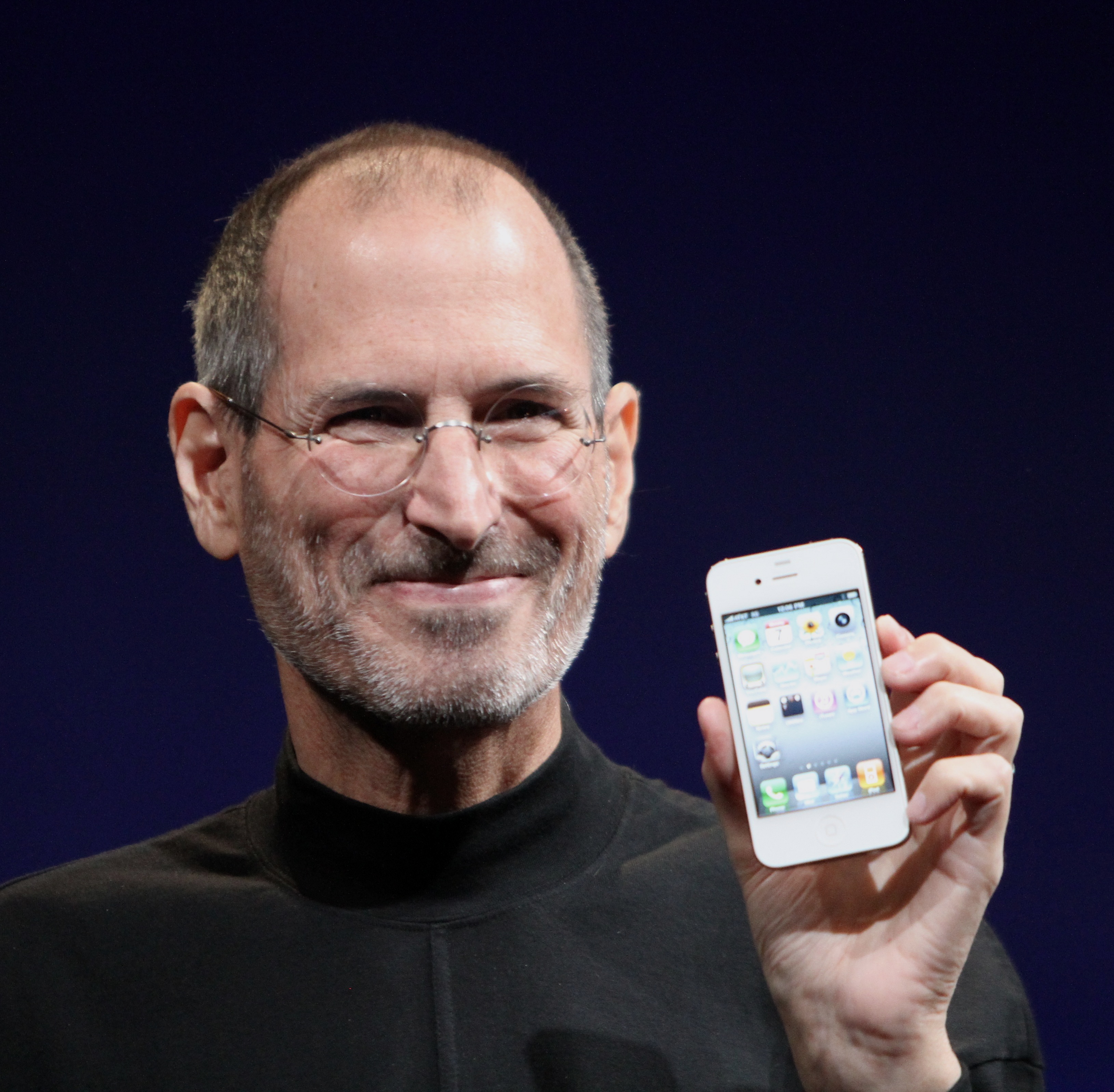
Cover photograph: Steve Jobs at WWDC, photographed by Matthew Yohe. The Wikimedia Commons image is used under CC BY-SA 3.0. This existing cropped version is reproduced without further editorial modification. The photographer does not endorse this article.